
A Quick Note on Grounding and Iron Regulation

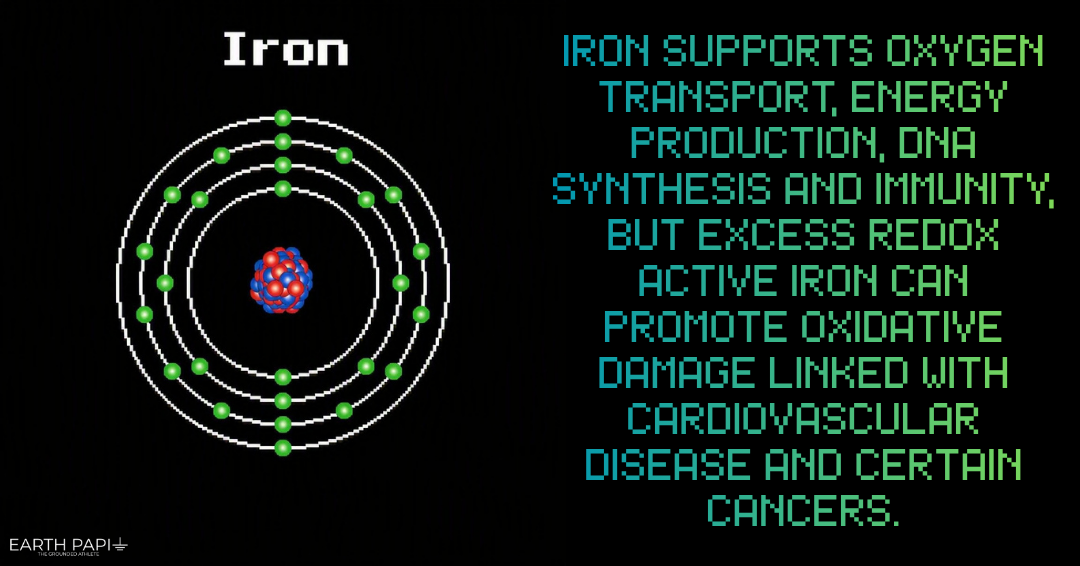
Iron is essential for oxygen transport, mitochondrial energy production, DNA synthesis and immune function. It is also chemically reactive. Excess redox active iron can promote the formation of reactive oxygen species and damage lipids, proteins and DNA. Abnormal iron accumulation has been associated with cardiovascular disease and certain cancers.[1–4]
Serum iron was one measurement within a larger 2011 paper by Karol and Paweł Sokal. The paper contained five experiments examining calcium phosphate homeostasis, electrolytes, thyroid hormones, glucose regulation and immune responses.[5]
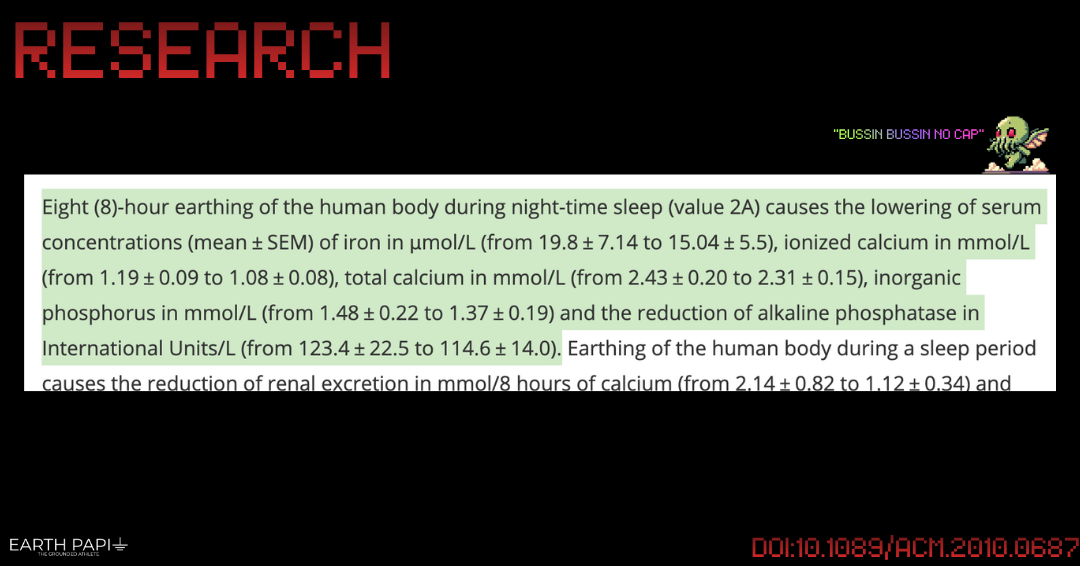
The first experiment primarily examined calcium phosphate homeostasis and included serum iron as an additional measurement. Eighty-four adults between the ages of 20 and 64 completed an initial ungrounded night. They were then divided into a grounded group of 42 participants and an ungrounded control group of 42.
After eight hours, mean serum iron was 15.04 micromoles per liter in the grounded group compared with 19.80 micromoles per liter in the ungrounded group. The baseline value across all 84 participants had been 20.79 micromoles per liter. The difference between the grounded and ungrounded groups was statistically significant at p = 0.001.[5]
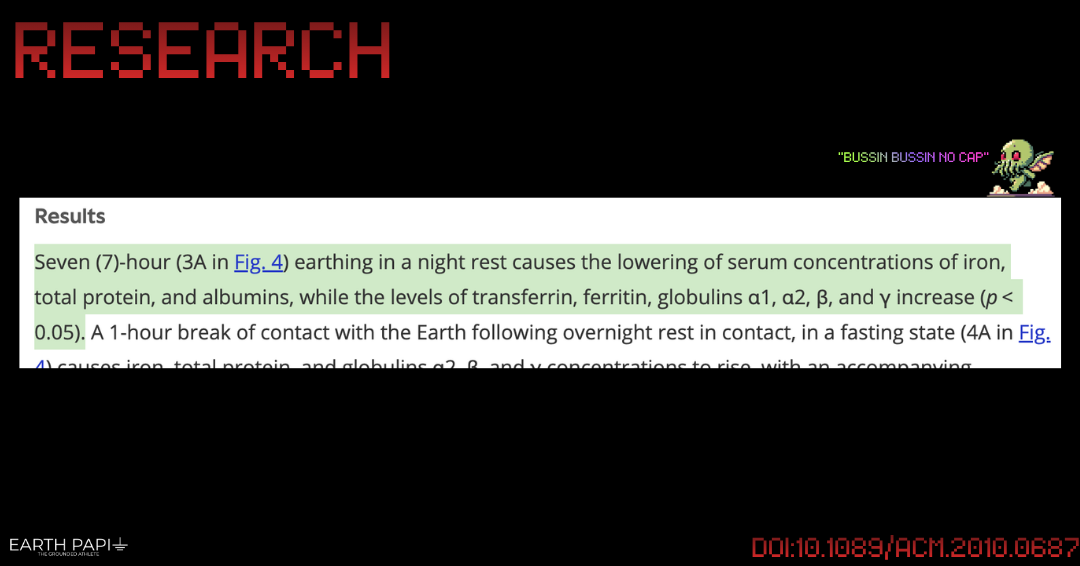
The paper’s separate fifth experiment examined immune responses in 32 participants. Seven hours of grounding lowered serum iron while increasing transferrin and ferritin. These changes are consistent with altered iron transport or distribution, but they do not establish that iron was removed from the body or deposited in a particular tissue.

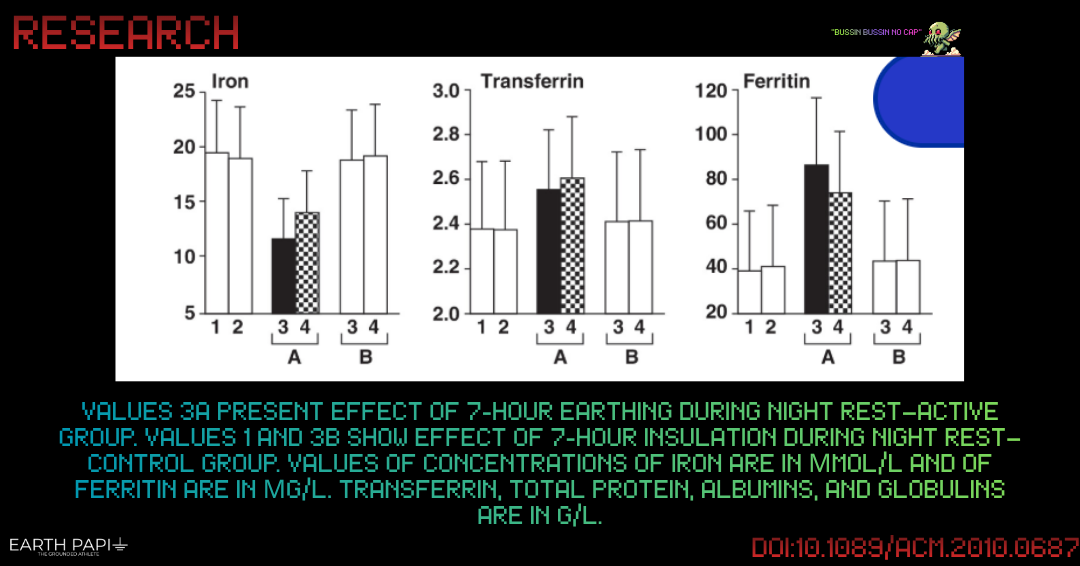
Serum iron represents circulating iron at the time of measurement. It does not independently reveal total body iron stores, transferrin saturation or the amount of redox active iron. The most precise conclusion is that grounding produced measurable changes in circulating iron related markers as one component of the Sokals’ broader investigation into human physiological responses to Earth contact.


References
Abbaspour N, Hurrell R, Kelishadi R. Review on iron and its importance for human health. J Res Med Sci. 2014;19(2):164–174. PMCID: PMC3999603
Naito Y, Masuyama T, Ishihara M. Iron and cardiovascular diseases. J Cardiol. 2021;77(2):160–165. doi:10.1016/j.jjcc.2020.07.009
Fonseca-Nunes A, Jakszyn P, Agudo A. Iron and cancer risk: a systematic review and meta-analysis of the epidemiological evidence. Cancer Epidemiol Biomarkers Prev. 2014;23(1):12–31. doi:10.1158/1055-9965.EPI-13-0733
Torti SV, Manz DH, Paul BT, Blanchette-Farra N, Torti FM. Iron and cancer. Annu Rev Nutr. 2018;38:97–125. doi:10.1146/annurev-nutr-082117-051732
Sokal K, Sokal P. Earthing the human body influences physiologic processes. J Altern Complement Med. 2011;17(4):301–308. doi:10.1089/acm.2010.0687