
Grounding and Glucose Regulation

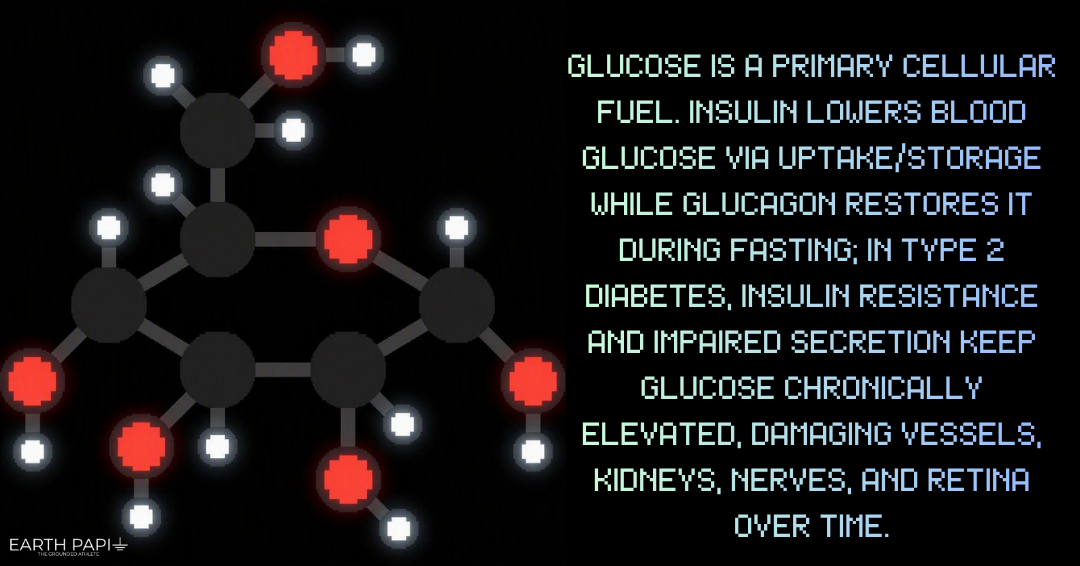
Glucose is a primary cellular fuel. Insulin lowers blood glucose by promoting its uptake and storage, while glucagon helps restore glucose during fasting. In type 2 diabetes, insulin resistance and insufficient insulin secretion allow glucose to remain elevated. Over time, this can damage blood vessels, kidneys, nerves and the retina.
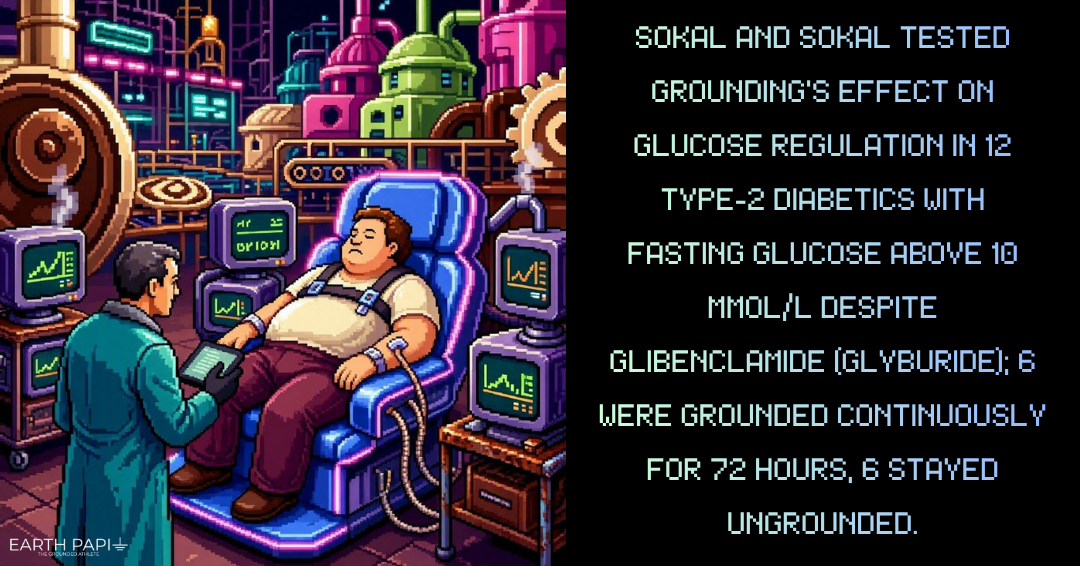
Karol and Paweł Sokal examined whether grounding could influence glucose regulation in 12 adults with type 2 diabetes. All had fasting glucose above 10 mmol/L despite taking glibenclamide, also known as glyburide. Six participants were continuously grounded for 72 hours while six remained ungrounded.
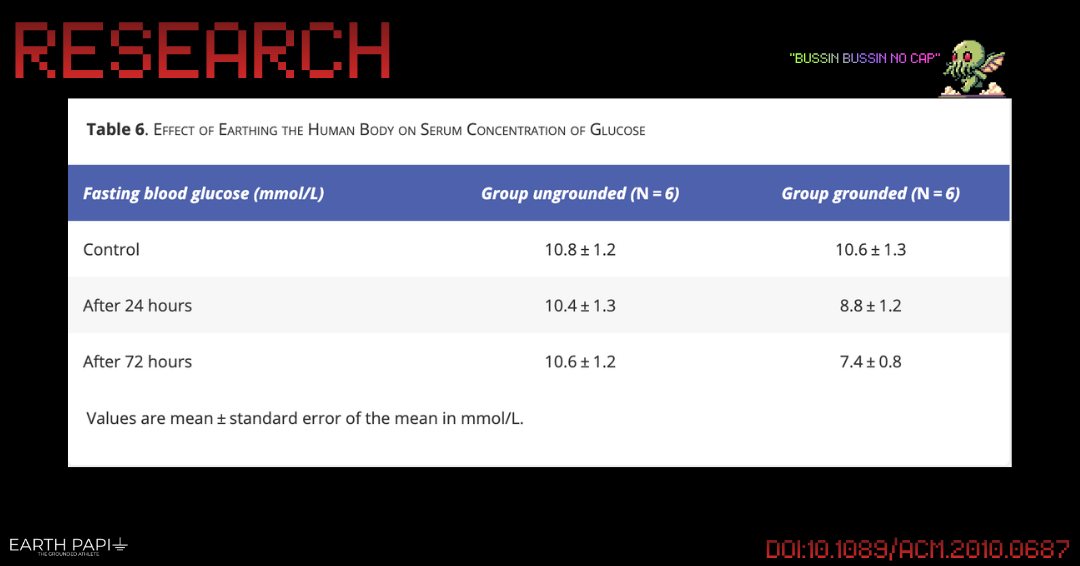
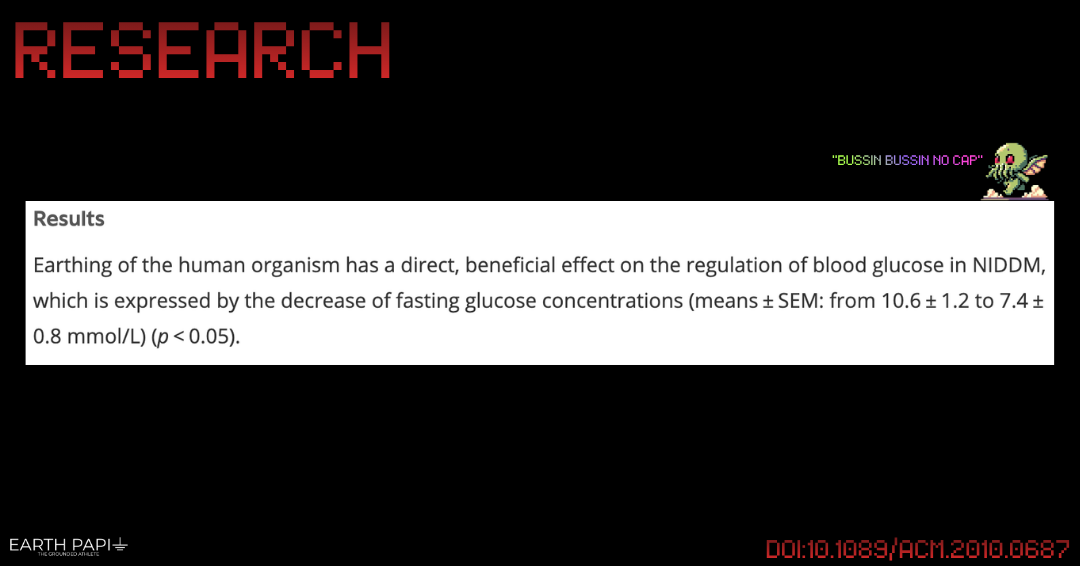
Fasting glucose in the grounded group fell from 10.6 mmol/L at baseline to 8.8 mmol/L after 24 hours and 7.4 mmol/L after 72 hours. This was an approximate 30 percent reduction. The ungrounded group remained nearly unchanged, moving from 10.8 to 10.6 mmol/L. The reported difference was statistically significant.
A level of 7.4 mmol/L is approximately 133 mg/dL. This brought the grounded group close to the American Diabetes Association’s usual premeal target of 4.4 to 7.2 mmol/L for many nonpregnant adults, although individual targets vary.
One design detail requires careful interpretation. After 24 hours, the grounded group discontinued glibenclamide and ACE inhibitor medication while the control group did not. Stopping a glucose-lowering drug would ordinarily be expected to raise glucose rather than lower it. Even so, the unequal medication conditions prevent the glucose change from being attributed to grounding with complete isolation. The experiment also did not measure insulin, glucose uptake, liver glucose production or HbA1c.

Diabetes also affects the electrical and mechanical behavior of red blood cells. A separate study found progressively less negative red blood cell zeta potential in healthy participants, people with diabetes and people with both diabetes and cardiovascular disease. Reduced electrostatic repulsion can permit greater cell aggregation and contribute to impaired blood flow.
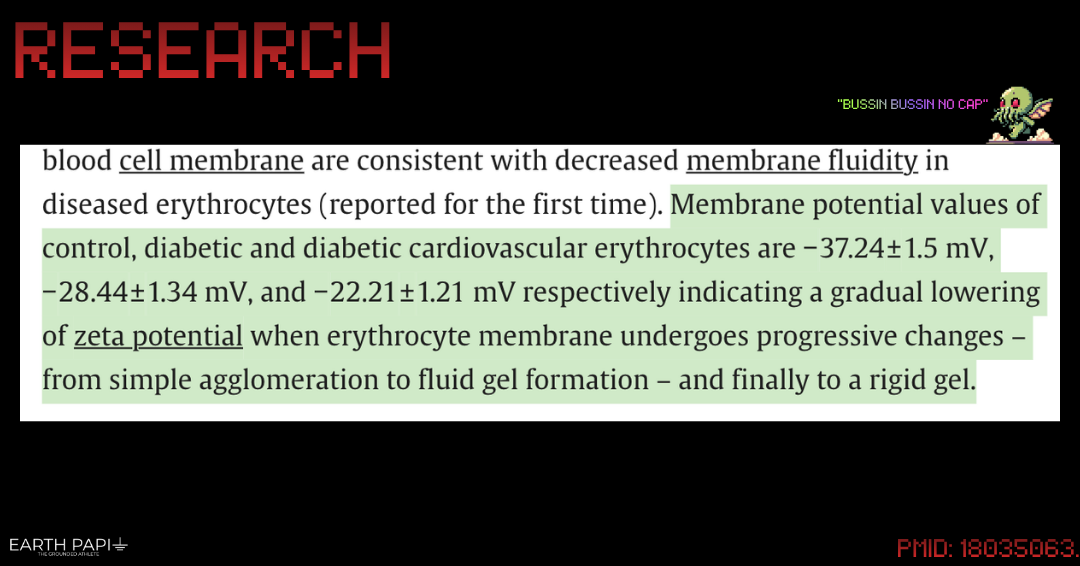
Another small experiment involving healthy adults found that two hours of grounding increased red blood cell zeta potential and reduced aggregation. This provides relevant vascular context, but it does not establish that changes in zeta potential caused the glucose reduction observed by the Sokals.

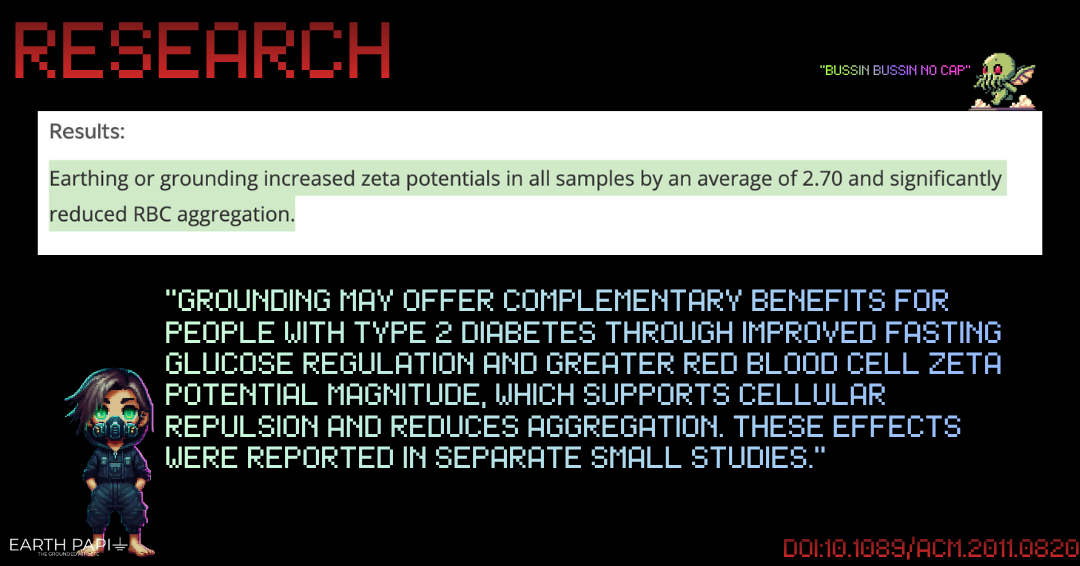
The most precise conclusion is that continuous grounding coincided with a substantial reduction in fasting glucose among six adults with type 2 diabetes over 72 hours, while glucose remained stable in six ungrounded controls. The result supports grounding as a possible complementary input to glucose regulation. It does not support replacing prescribed medication, glucose monitoring, nutrition, exercise or medical care.
As always, if you’re intersted in learning more about grounding, check out Earth & Water!


References
Sokal, K., & Sokal, P. (2011). Earthing the human body influences physiologic processes. Journal of Alternative and Complementary Medicine, 17(4), 301–308. https://doi.org/10.1089/acm.2010.0687
American Diabetes Association. (2026). Glycemic goals, hypoglycemia, and hyperglycemic crises: Standards of Care in Diabetes—2026. Diabetes Care, 49(Supplement 1), S132–S149. ADA Standards of Care
Adak, S., Chowdhury, S., & Bhattacharyya, M. (2008). Dynamic and electrokinetic behavior of erythrocyte membrane in diabetes mellitus and diabetic cardiovascular disease. Biochimica et Biophysica Acta, 1780(2), 108–115. https://doi.org/10.1016/j.bbagen.2007.10.013
Chevalier, G., Sinatra, S. T., Oschman, J. L., & Delany, R. M. (2013). Earthing the human body reduces blood viscosity: A major factor in cardiovascular disease. Journal of Alternative and Complementary Medicine, 19(2), 102–110. https://doi.org/10.1089/acm.2011.0820