
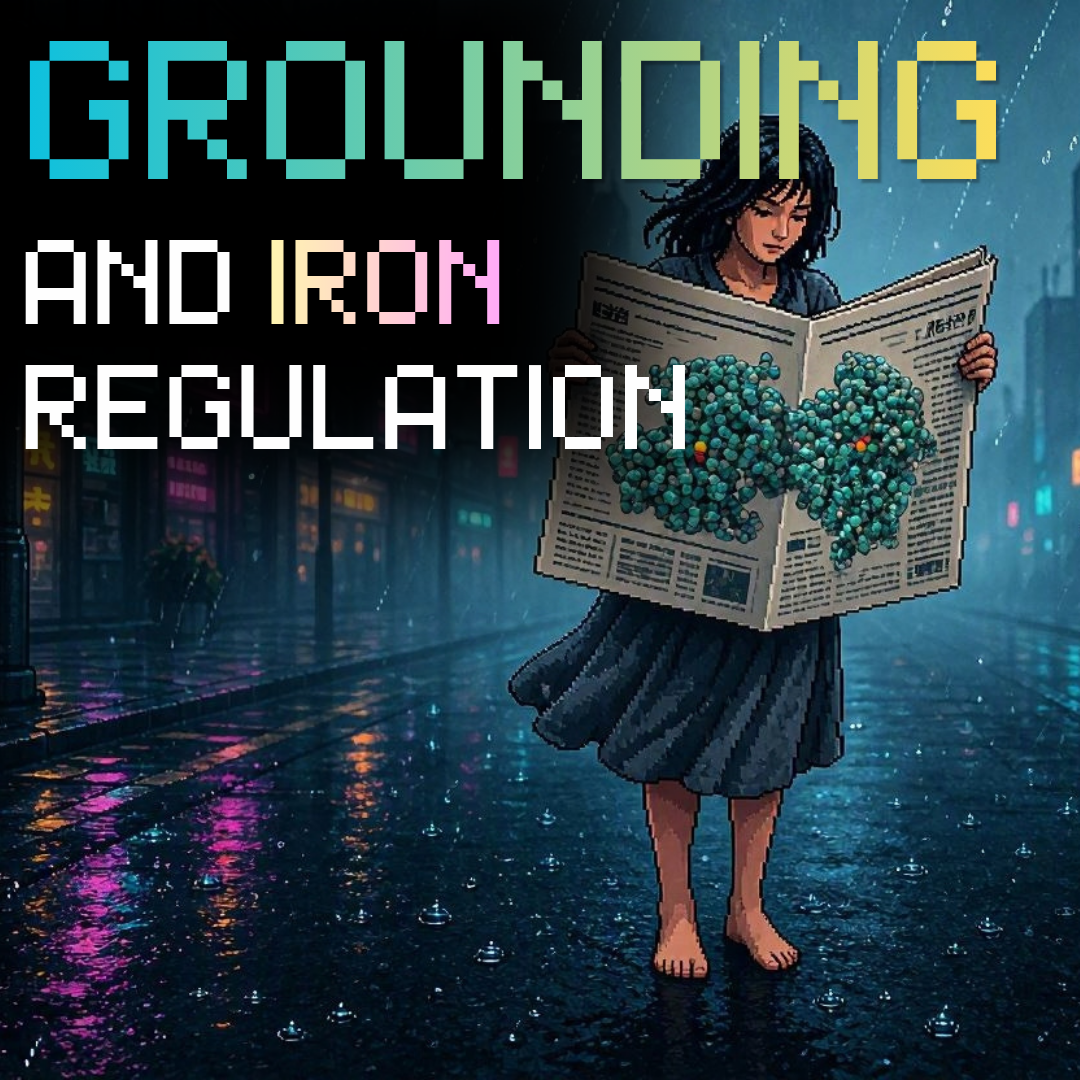
A Quick Note on Grounding and Iron Regulation
Iron is essential for oxygen transport, mitochondrial energy production, DNA synthesis and immune function. It is also chemically reactive. Excess redox active iron can promote the formation of reactive oxygen species and damage lipids, proteins and DNA. Abnormal iron accumulation has been associated with cardiovascular disease and certain cancers.
Grounding and Glucose Regulation
Glucose is a primary cellular fuel. Insulin lowers blood glucose by promoting its uptake and storage, while glucagon helps restore glucose during fasting. In type 2 diabetes, insulin resistance and insufficient insulin secretion allow glucose to remain elevated. Over time, this can damage blood vessels, kidneys, nerves and the retina.
Grounding and Calcium Phosphate Homeostasis
Calcium and phosphate are not simply materials stored in bone. Calcium supports muscle contraction, nerve transmission and cell signaling. Phosphate forms part of ATP, cell membranes and the body’s buffering system. Their concentrations are continuously regulated through exchange between the blood, cells, kidneys, intestines and skeleton.

Natural Fabrics and Grounding: Two Complementary Benefits
When fabric repeatedly touches and separates from the skin or another material, electrons and ions can transfer between the surfaces. This process is known as triboelectric charging.
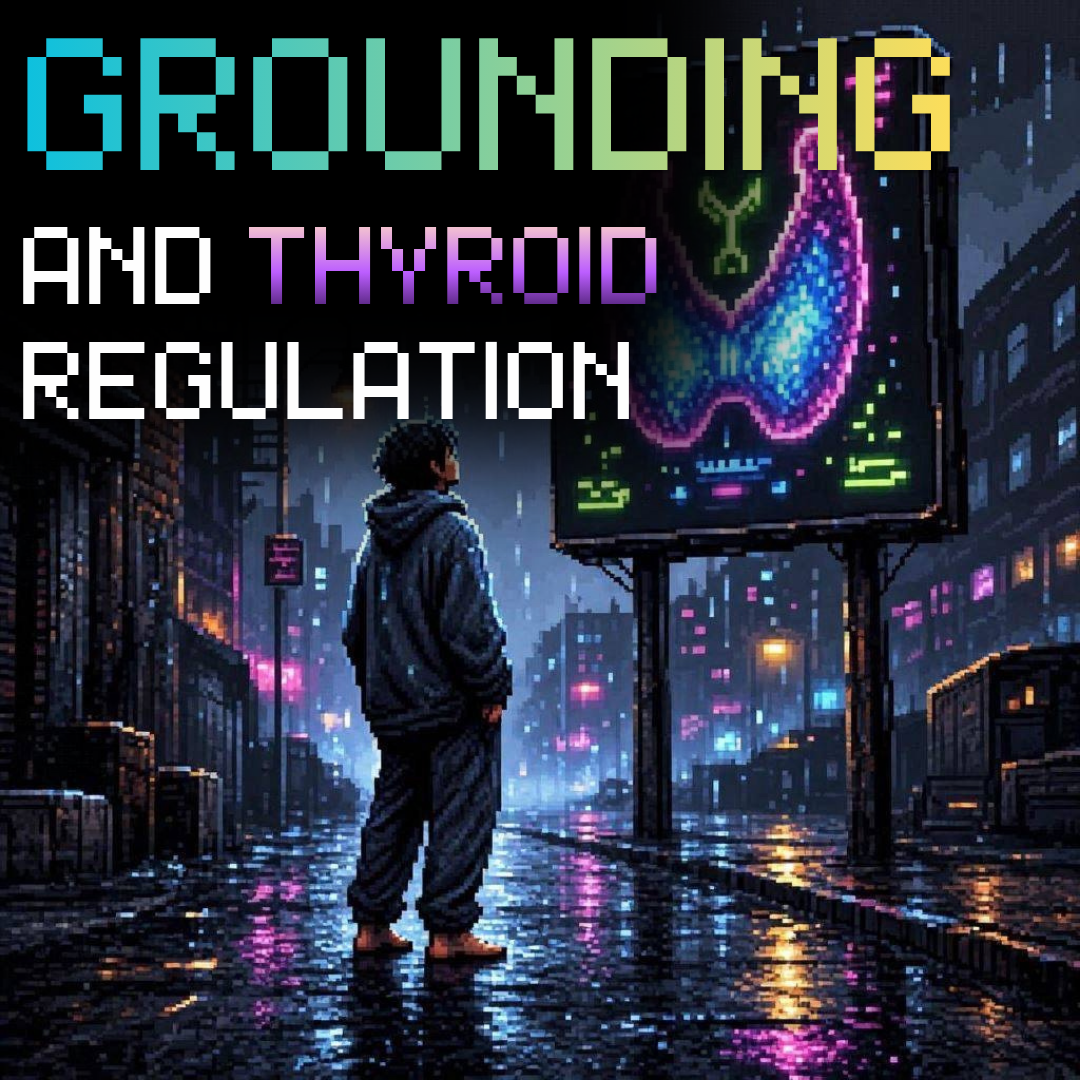
Grounding and Thyroid Regulation
A single night of grounding produced a measurable change in the hormonal signals governing thyroid and metabolic physiology.
Grounding and the Human Electrome
Grounding is usually discussed through inflammation, sleep, pain, blood flow, redox balance, and recovery. Those are important biological pathways, but they may sit inside a larger framework. Recent searchings of pubmed has brought me to the electrome.
Short: The Body’s Electrical Drainage System
Grounding can be compared to a city drainage system. When water has no clear path out, it accumulates, pressure rises, and the system becomes overloaded.
Earth & Death: Grounding and The Aging Process
In this article, we will examine theories of aging, the relationship between physiology and environment, and how grounding may influence the aging process. Because this subject brings us close to mortality, I found myself drawn to several perspectives on death.

How Grounding Makes You More Attractive (Earth & The Beauty Effect)
Skin appearance tracks underlying physiology. Circulation sets the boundary conditions: nutrient delivery, oxygen flux, waste removal, and redox balance. When flow becomes irregular or reduced, gradients steepen, local stress rises, and the visible markers of aging follow.

Grounding & Infrared Imaging
In 2015, researchers at the University of California, Irvine conducted a randomized, double blind pilot study to test whether grounding could influence circulation as measured by thermography and LSCI.

Hypertension, Blood Flow, and Grounding
Hypertension remains one of the most common and damaging chronic conditions worldwide. Elevated blood pressure is tightly linked to cardiovascular risk, stroke, and early mortality. While often framed as a purely vascular or neural problem, blood pressure is inseparable from blood rheology, especially blood viscosity, which we discussed in the last article regarding zeta potential.

Earth & Heart: Zeta Potential, Blood Flow, and Grounding
Red blood cells carry a net negative surface charge, largely due to sialic acid residues on their membranes. This negative charge creates electrostatic repulsion between cells, preventing them from clumping together under healthy conditions. Zeta potential quantifies this repulsion.

Earth & HRV: Grounding, the Autonomic Nervous System, and Vagal Tone
Heart rate variability (HRV) refers to the variation in time between successive heartbeats. Rather than indicating irregularity, higher HRV reflects a healthy and adaptable autonomic nervous system (ANS), particularly strong parasympathetic or vagal activity.

Grounding, Stress, and the HPA Axis: Evidence from a Rodent Model
In 2023, Park and colleagues investigated whether grounding could influence stress-related behavior and neuroendocrine signaling in rats.
Electrical Contact With Earth and the Autonomic Nervous System: Evidence From EEG, EMG, and Blood Volume Pulse
In 2005, Chevalier, Mori, and Oschman conducted a double-blind pilot study to test whether direct electrical contact with the Earth could influence stress-related physiological signals.
Grounding as a Sleep-Focused Intervention in Mild Alzheimer’s Disease
From 2019 to 2020, researchers at the Department of Neurology and Chinese Medicine at Kaohsiung Chang Gung Memorial Hospital ran a clean randomized, double-blind study on grounding in patients with mild Alzheimer’s disease.
The Grounding & Cortisol / Melatonin Connection
Cortisol is a steroid hormone released by the adrenal cortex and controlled by the hypothalamic-pituitary-adrenal axis. Its primary job is simple: mobilize glucose when the organism is under load. CRH → ACTH → cortisol, plus a circadian oscillation driven by the suprachiasmatic nucleus.

Zooming In - Grounding's Effect on Bioenergetics and Mitochondrial Efficiency
I’ll be going over a cool paper for you guys today. In 2025, researchers at UC Davis uncovered a very cool effect on mitochondrial performance that could redefine what it means to be grounded. Although, the results have been hinted at many times in past articles and in the Earth & Water Books. Can’t say I’m surprised!

Disease Common Denominator - Oxidative Stress
Oxidative stress arises when the production of reactive oxygen species exceeds the body’s electron-based defense capacity. These unpaired electrons strip stability from biomolecules, damaging lipids, proteins, and DNA. The result is chronic, low-grade inflammation that underlies metabolic, cardiovascular, and neurodegenerative disease.
Earth Circuit Generator - Lightning
Lightning is the primary mechanism that moves negative charge from the atmosphere back into the Earth. Each strike injects a sharp current pulse into the ground, spreading electrons through soil, rock, water, and built surfaces. That constant charge transfer is what maintains the Earth’s negative surface potential and keeps the global electric circuit running.