
Electrical Contact With Earth and the Autonomic Nervous System: Evidence From EEG, EMG, and Blood Volume Pulse

In 2005, Chevalier, Mori, and Oschman conducted a double-blind pilot study to test whether direct electrical contact with the Earth could influence stress-related physiological signals. Fifty-eight adults were divided into a grounded group and an insulated control group. EEG, EMG, and blood volume pulse (BVP) were recorded using a biofeedback system. Grounding was established through conductive patches on the soles of the feet. The grounded group experienced 28 minutes insulated followed by 28 minutes grounded. Controls remained insulated for the full session. BVP was measured via photoplethysmography and served as a proxy for autonomic cardiovascular activity driven by sympathetic tone.
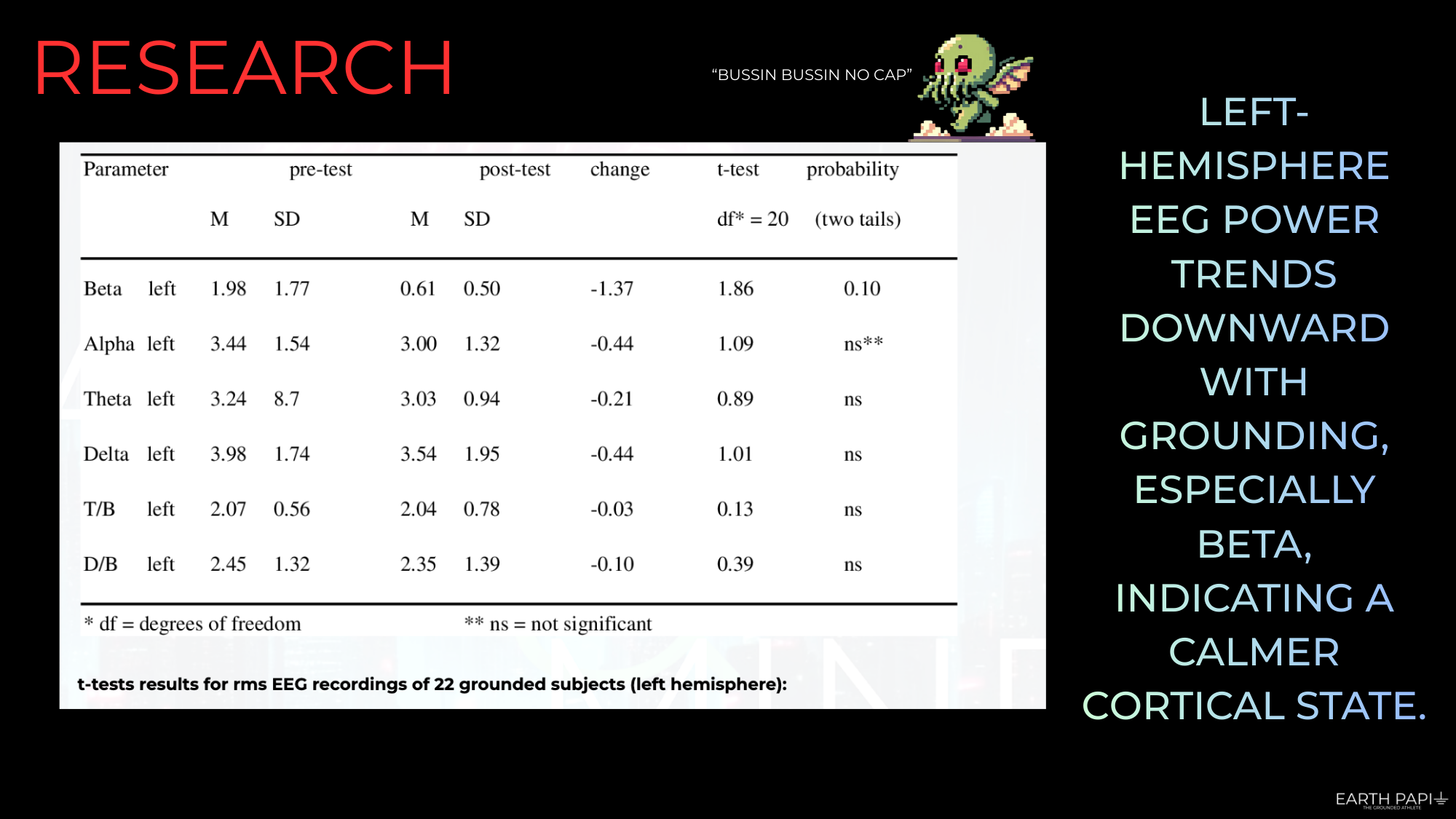
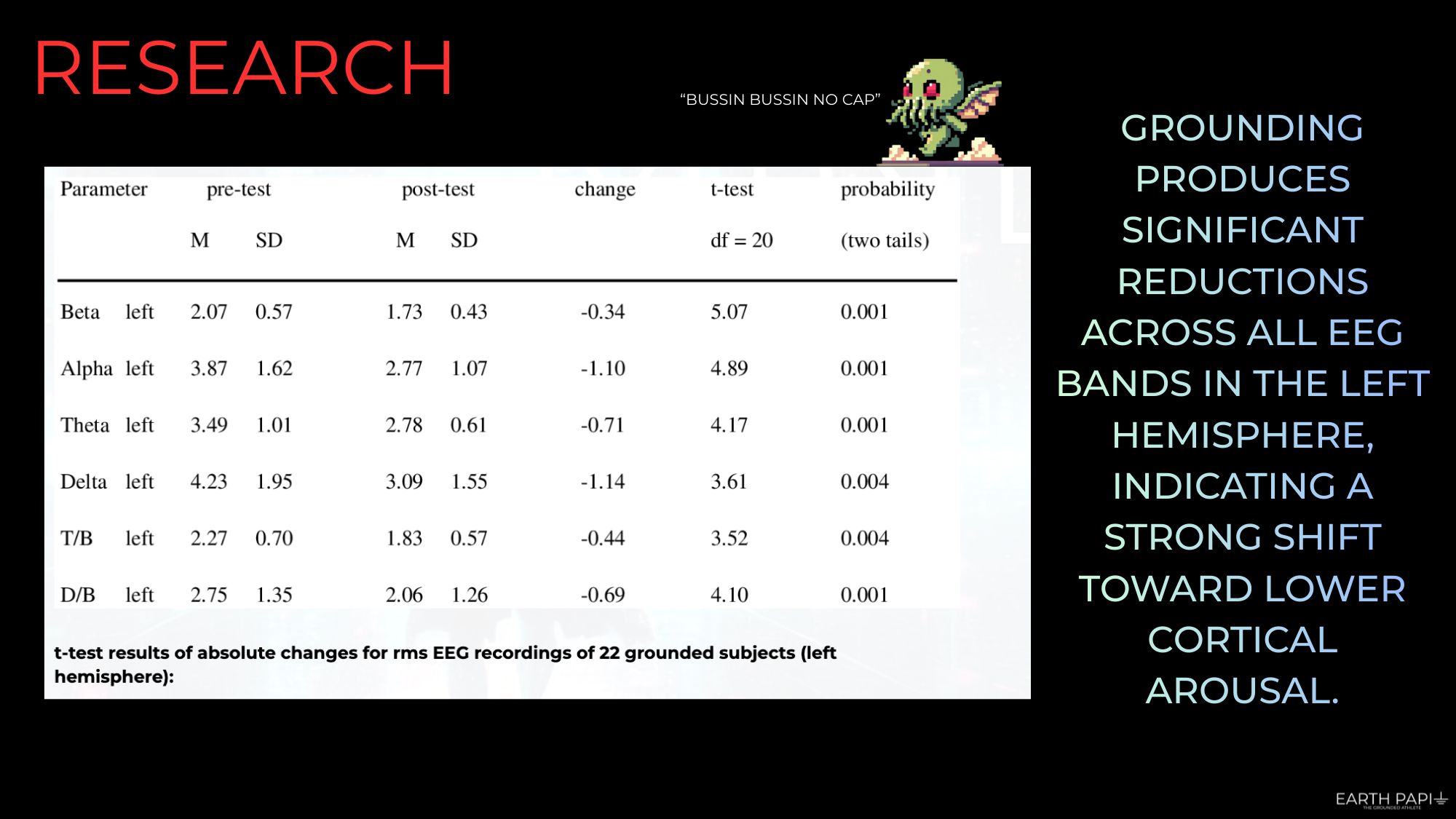
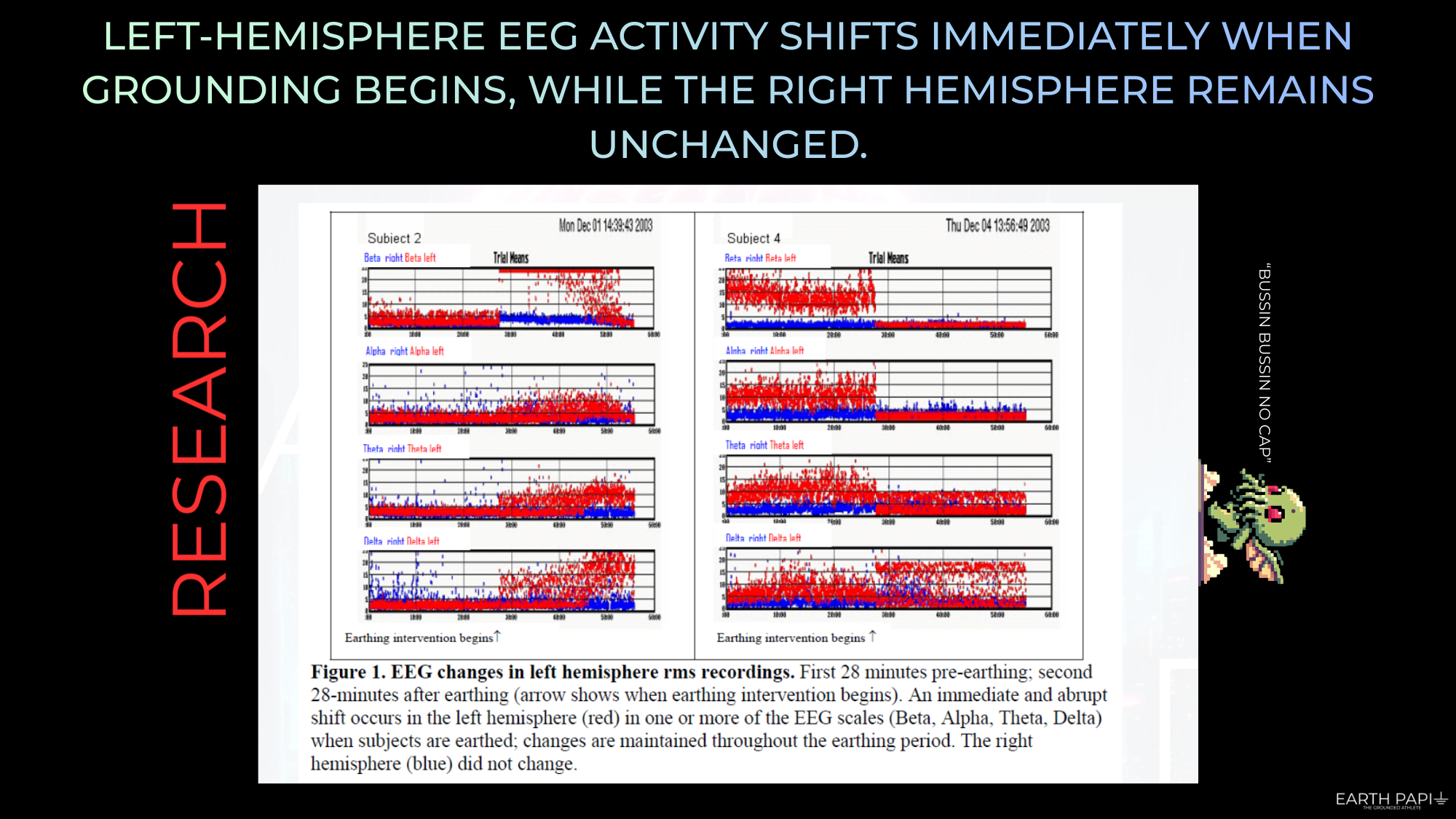
Upon grounding, about half of the grounded participants showed an immediate shift in EEG root-mean-square power in the left cerebral hemisphere across alpha, beta, theta, and delta bands. No comparable change appeared in the right hemisphere. Prior neurophysiology work associates the left hemisphere more strongly with parasympathetic regulation and the right with sympathetic activity. This hemispheric asymmetry aligns with earlier findings on cardiac autonomic control.

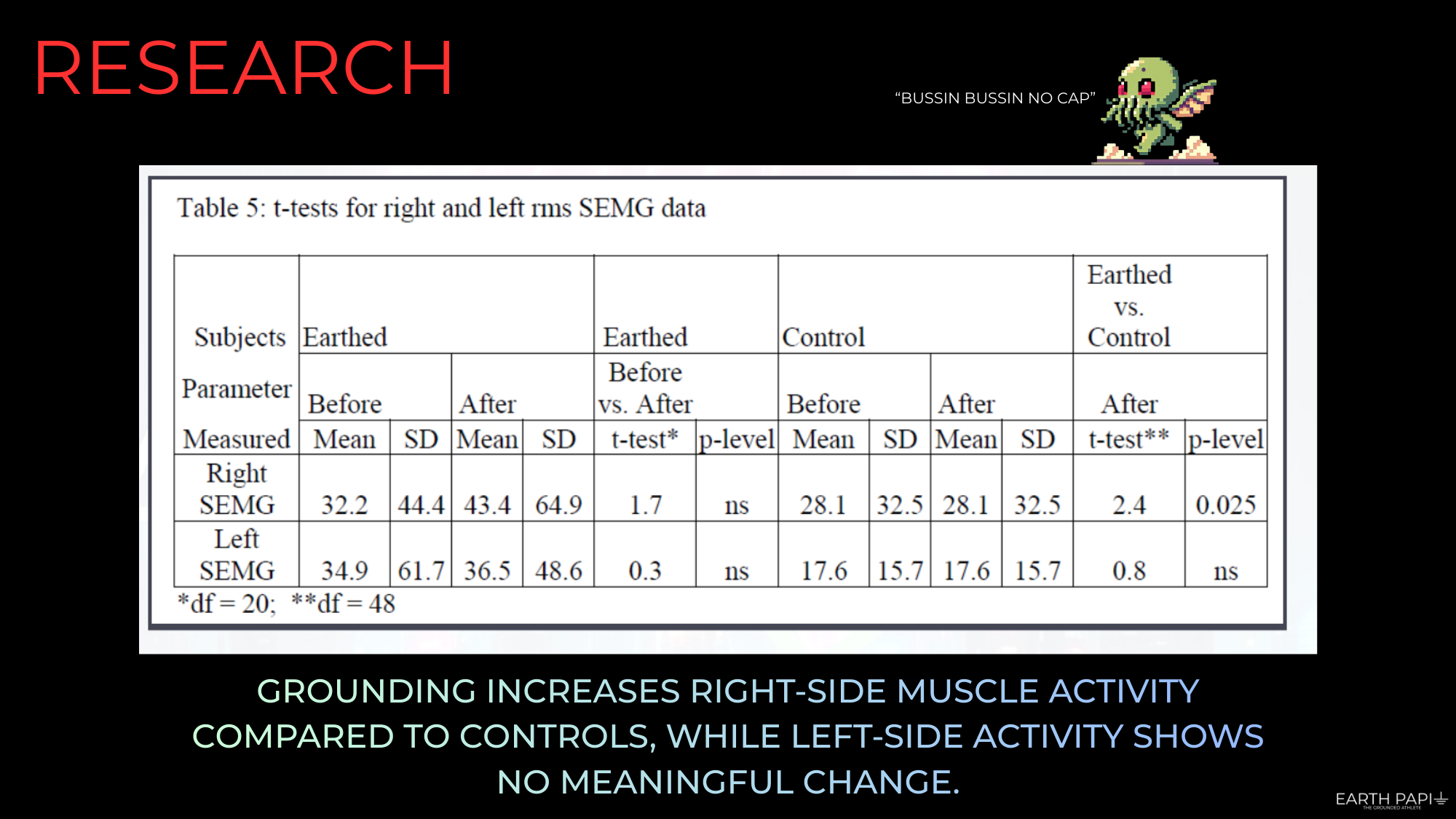
In parallel, EMG recordings from the upper trapezius muscles showed rapid normalization of muscle tension. Hypertonic muscles relaxed and hypotonic muscles increased toward baseline. These changes occurred within minutes of grounding.
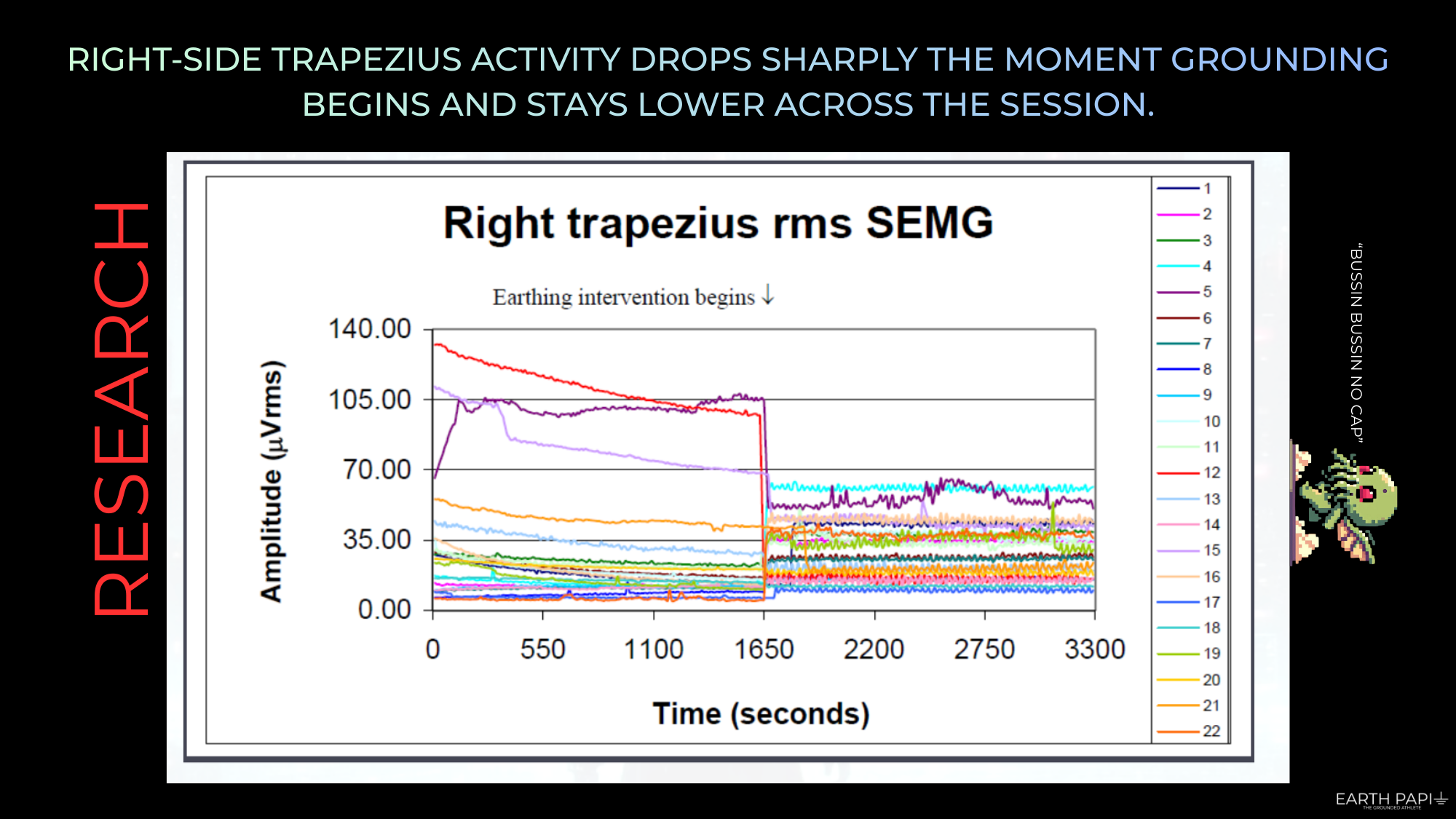
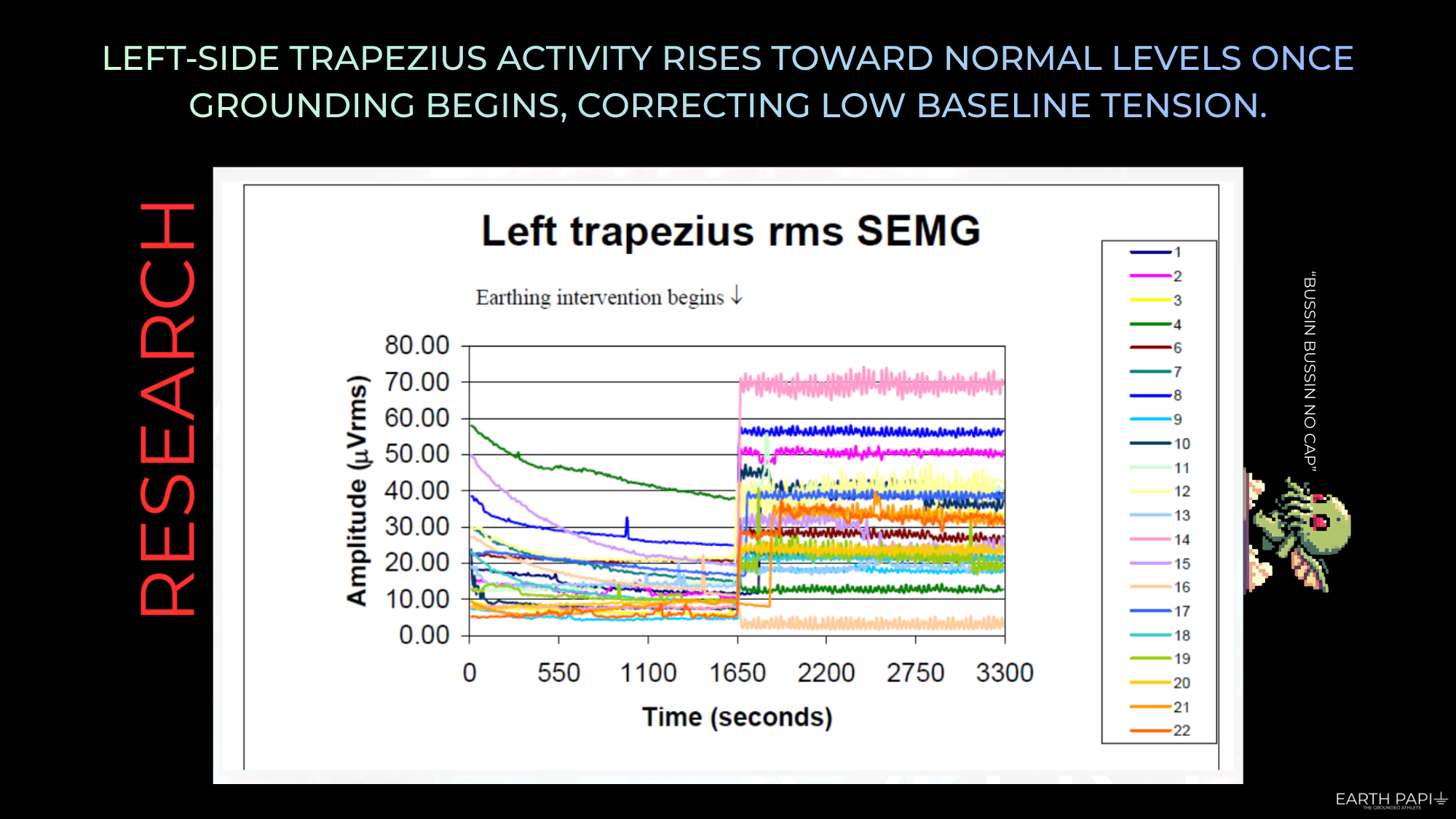
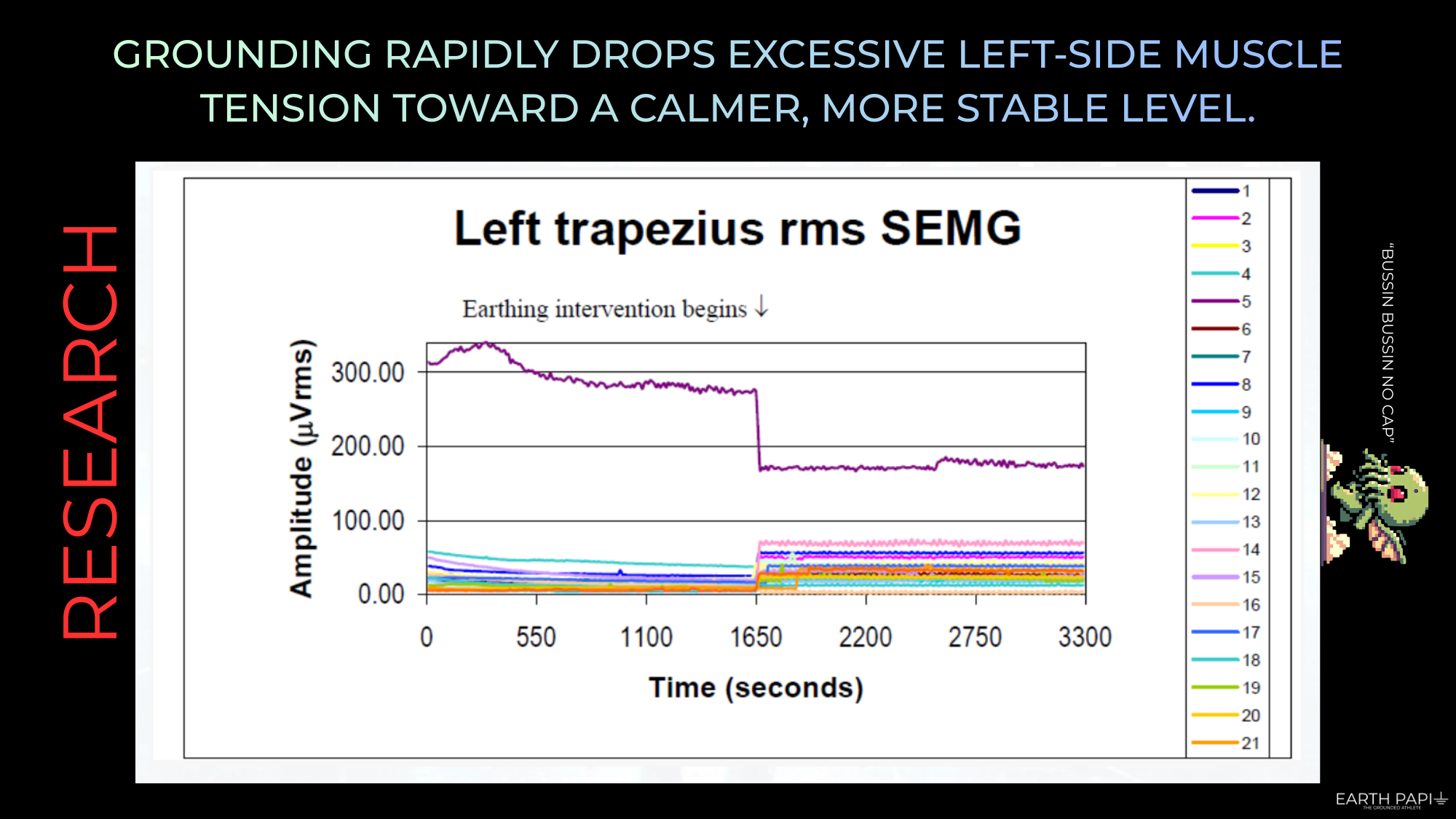
Blood volume pulse also shifted. Nineteen of twenty-two grounded subjects exhibited a decrease in BVP amplitude consistent with reduced sympathetic drive and increased parasympathetic influence. Across EEG, EMG, and BVP, the dominant pattern was a movement toward lower physiological stress and improved autonomic balance. The authors emphasized a normalization effect rather than a unidirectional stimulation or suppression. This mirrors earlier cortisol data in which grounding reduced elevated cortisol while raising abnormally low levels toward the mean.
A later EEG study in 2018 by Rahman and colleagues at the University of Malaysia Pahang extended these findings in younger adults. Using STFT, wavelet analysis, and neural-network classification, they observed increased alpha power and reduced beta power after grounding. Alpha activity in the 8–12 Hz range tracks relaxed wakefulness, while beta activity in the 13–30 Hz range tracks alert cognitive engagement. The alpha rise with concurrent beta reduction indicates a shift toward a calmer cortical state. Across both studies, grounding consistently altered central and peripheral electrophysiology in a direction associated with reduced sympathetic load and enhanced parasympathetic regulation.
As always, if you’re interested in learning more about all of this, check out Earth & Water.
Until next time,
Rob.

Further Reading:
Avnon Y, Nitzan M, Sprecher E, Rogowski Z, Yarnitsky D. Different patterns of parasympathetic activation in uni- and bilateral migraineurs. Brain. 2003 Jul;126(Pt 7):1660-70. doi: 10.1093/brain/awg158. Epub 2003 Apr 22. PMID: 12805117.
Hilz MJ, Dütsch M, Perrine K, Nelson PK, Rauhut U, Devinsky O. Hemispheric influence on autonomic modulation and baroreflex sensitivity. Ann Neurol. 2001 May;49(5):575-84. PMID: 11357947.
Wittling W, Block A, Genzel S, Schweiger E. Hemisphere asymmetry in parasympathetic control of the heart. Neuropsychologia. 1998 May;36(5):461-8. doi: 10.1016/s0028-3932(97)00129-2. PMID: 9699952.
Chevalier, Gaetan & Mori, Kazuhito & Oschman, James. (2005). The effect of Earthing (grounding) on human physiology. 2.
Rahman, Noor & Mustafa, Mahfuzah & Samad, Rosdiyana & Abdullah, Nor Rul Hasma & Sulaiman, Norizam & Pebrianti, Dwi. (2018). Classification of EEG Signal for Body Earthing Application. Journal of Telecommunication, Electronic and Computer Engineering (JTEC). 10. 81-85.