

Thermography is a noninvasive imaging method that detects infrared radiation emitted from the body’s surface. An infrared camera translates this radiation into a color coded thermogram, allowing visualization of regional temperature differences. Because skin temperature reflects underlying blood flow and inflammatory activity, thermography is commonly used to assess circulation abnormalities, infection, autonomic dysfunction, and in some settings cancer screening.
In more recent work, thermography has been paired with Laser Speckle Contrast Imaging (LSCI), a technique that visualizes blood flow in real time. LSCI relies on coherent laser light scattered by tissue. When red blood cells move within illuminated vessels, they alter the interference pattern of scattered light, producing dynamic “speckle” changes. These changes can be quantified to estimate blood flow velocity and volume. The method is noninvasive, rapid, and offers high spatial and temporal resolution.
Poor circulation is central to conditions such as peripheral artery disease, hypertension, atherosclerosis, diabetes, obesity, and Raynaud’s disease. In 2015, researchers at the University of California, Irvine conducted a randomized, double blind pilot study to test whether grounding could influence circulation as measured by thermography and LSCI. Forty participants were divided into a grounded group and a sham grounded control group. Subjects were connected to the ground port of an electrical outlet using conductive mats, pillows, and adhesive patches placed on the palms and soles. After a ten minute rest period, grounding was applied for one hour before post intervention imaging.

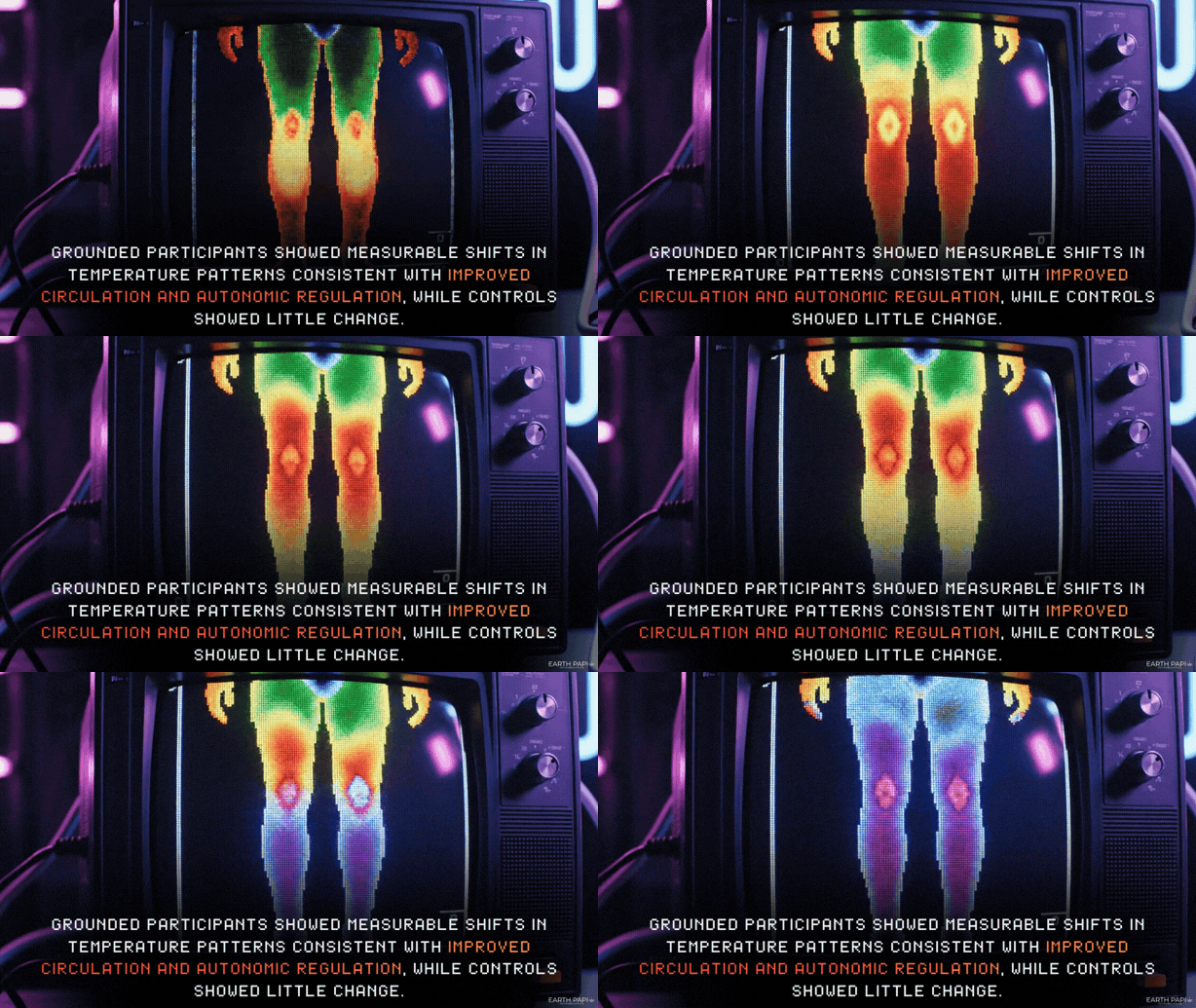
Thermal images of grounded participants showed distinct changes in temperature distribution across the face, neck, abdomen, and torso. In several cases, previously “hot” regions decreased in temperature, suggesting reduced inflammatory activity. In others, abdominal warmth increased, consistent with enhanced blood flow and autonomic regulation. Control subjects demonstrated little or no meaningful change. The authors concluded that even one hour of contact with the Earth may enhance autonomic nervous system regulation of peripheral circulation and body fluids, improving vascular dynamics in both the face and abdomen. They also noted prior evidence that grounding reduces red blood cell aggregation and blood viscosity (see my posts on zeta potential), factors that directly influence flow resistance.
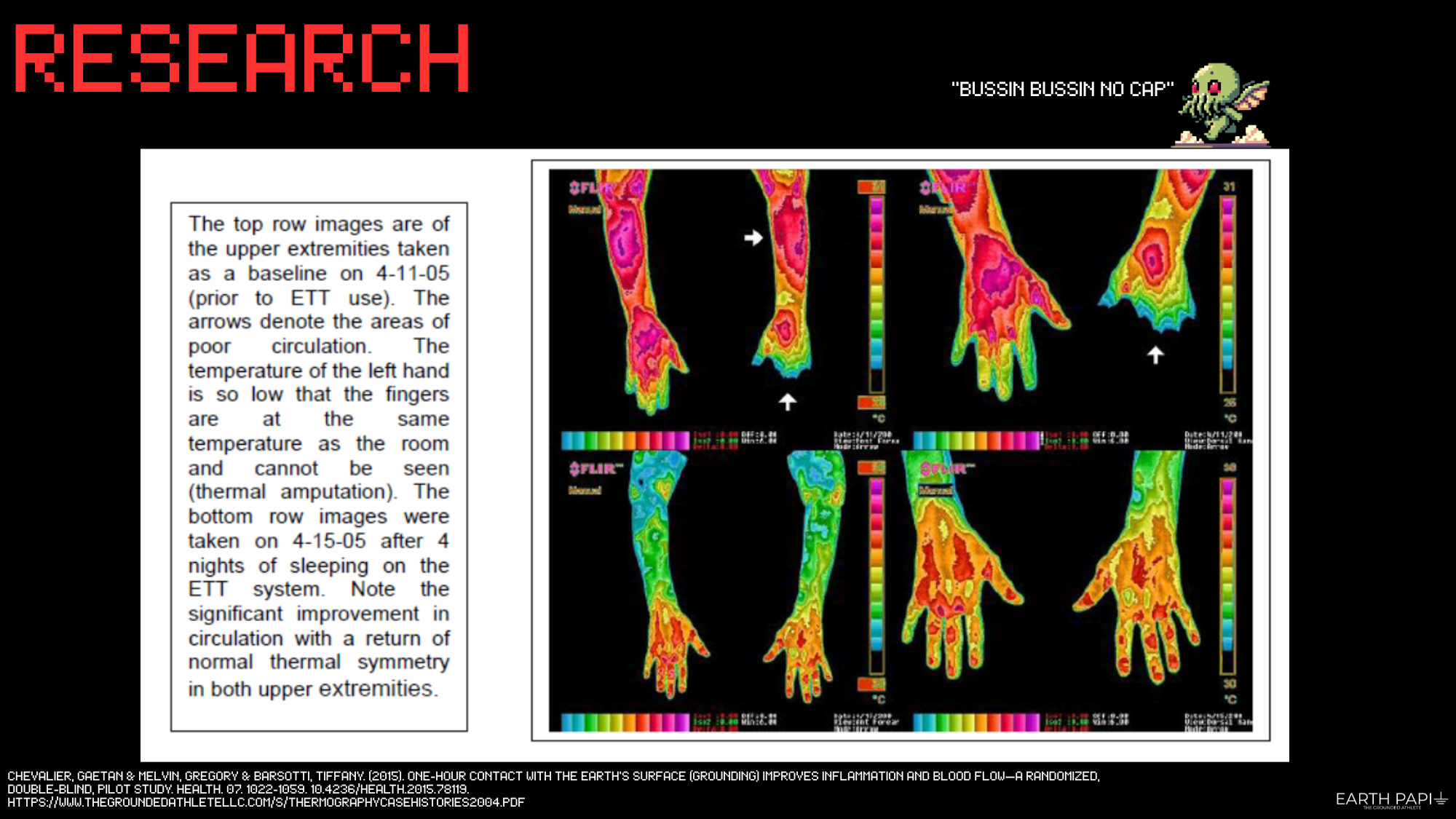
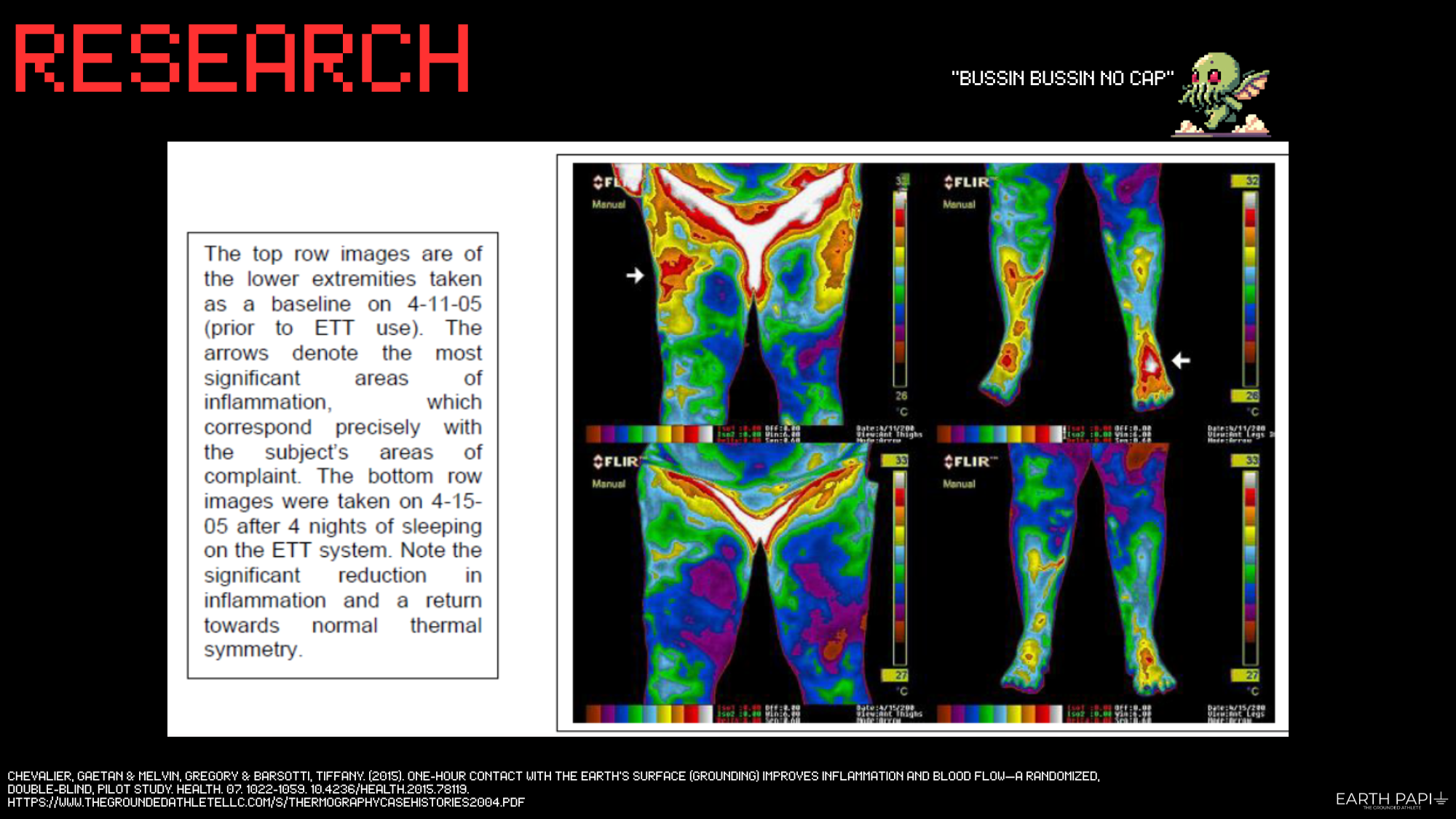
Earlier case reports published by Dr. William Amalu between 2004 and 2005 documented thermographic changes in twenty individuals using grounding sleep systems or conductive patches connected to earth. Across cases, reductions in inflammatory heat patterns were observed in both short and long term follow up.
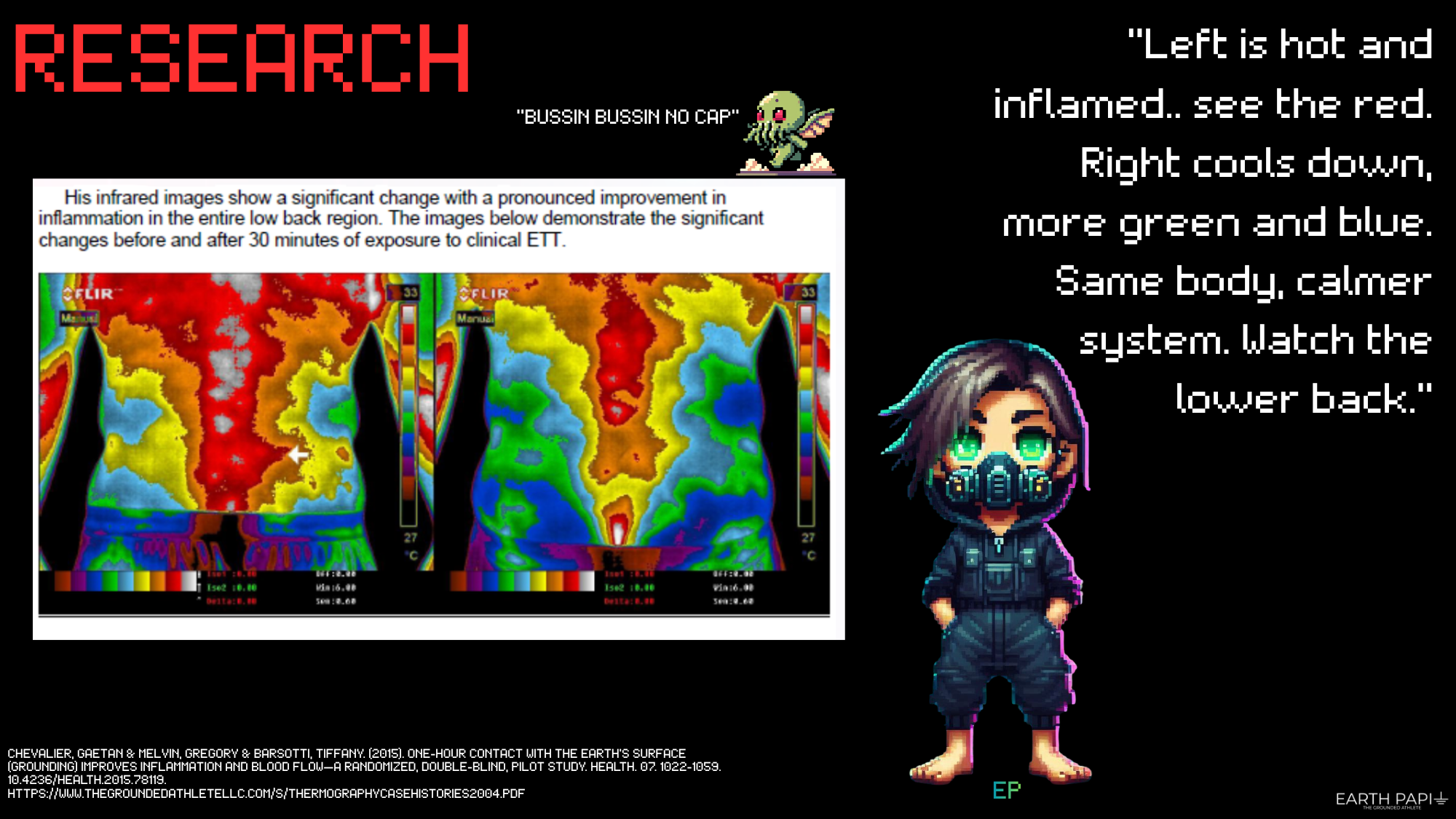
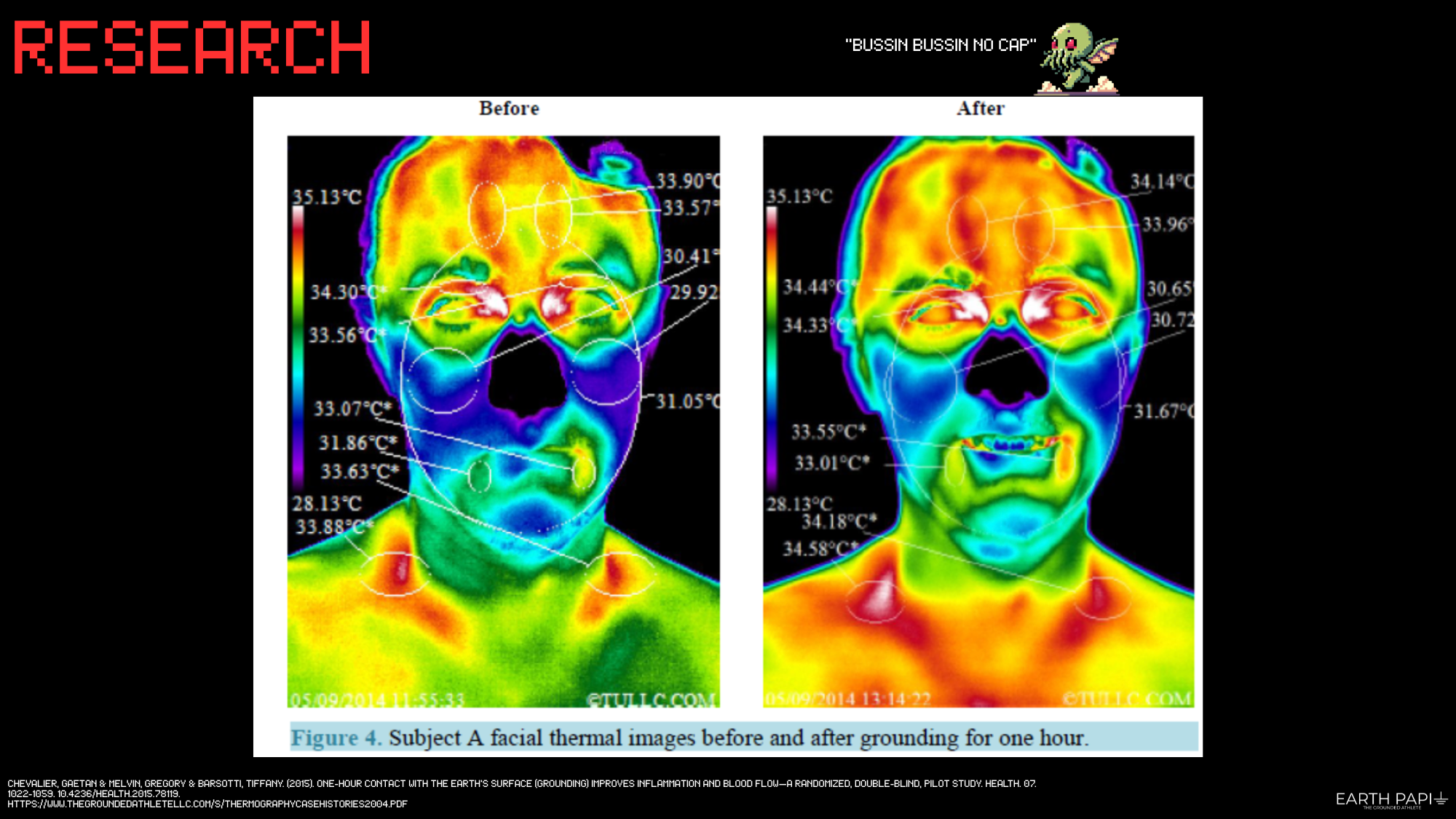
Taken together, thermography and LSCI provide visual evidence that grounding is associated with measurable shifts in surface temperature patterns and microvascular blood flow. When viewed alongside research on zeta potential, blood viscosity, and blood pressure, these findings suggest that contact with the Earth may influence cardiovascular dynamics through improved autonomic regulation and fluid flow properties.

As always, if you’re interested in learning more about grounding, check out Earth & Water.
References:
Chevalier, Gaetan & Melvin, Gregory & Barsotti, Tiffany. (2015). One-Hour Contact with the Earth’s Surface (Grounding) Improves Inflammation and Blood Flow—A Randomized, Double-Blind, Pilot Study. Health. 07. 1022-1059. 10.4236/health.2015.78119.
https://www.thegroundedathletellc.com/s/thermographycasehistories2004.pdf