Grounding and the Human Electrome

Grounding is usually discussed through inflammation, sleep, pain, blood flow, redox balance, and recovery. Those are important biological pathways, but they may sit inside a larger framework. Recent searchings of pubmed has brought me to the electrome.
The electrome refers to the living body’s total electrical organization. It includes ionic currents, membrane voltages, electrochemical gradients, electrical fields, mitochondrial charge separation, cytoskeletal charge movement, and the electrical behavior of cells and tissues. In this view the body is not only a biochemical machine. It is also an electrically active system that depends on maintained charge separation.

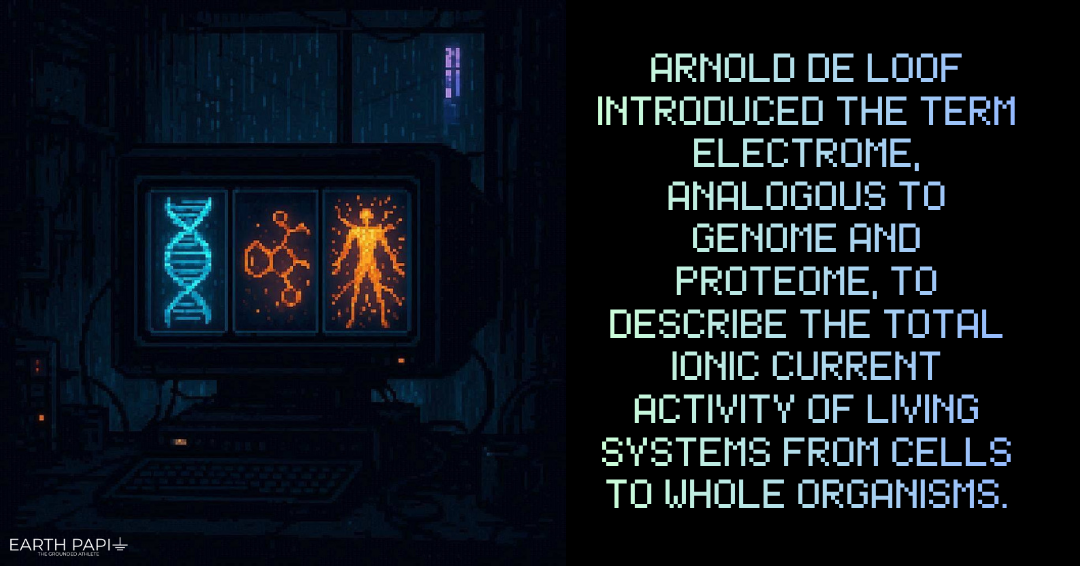
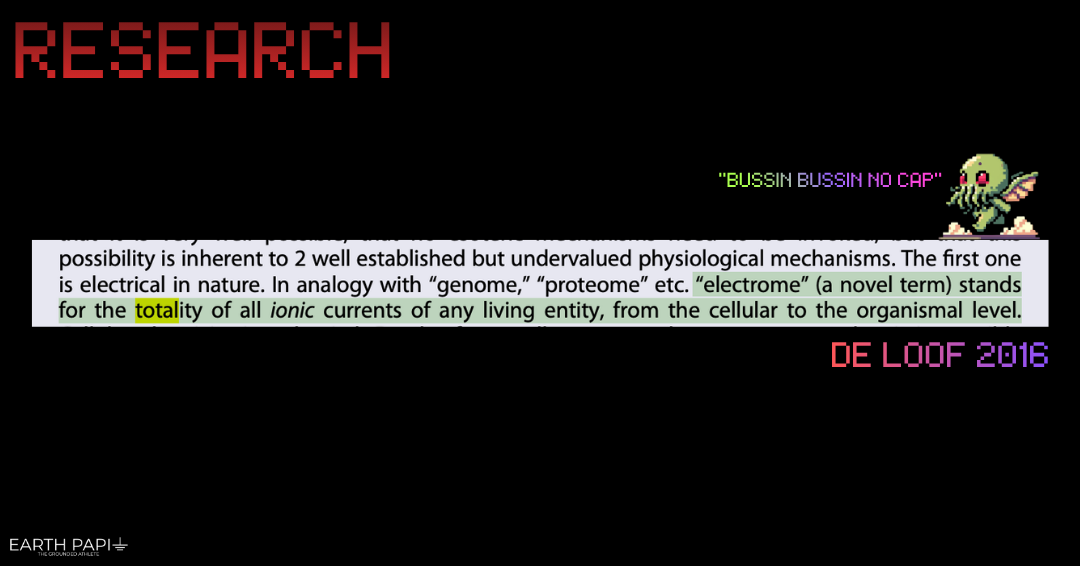
Arnold De Loof introduced the term electrome by analogy with words like genome and proteome. The genome describes the body’s genetic information. The proteome describes its protein expression. The electrome describes the total ionic-current activity of living systems, from cells to whole organisms.
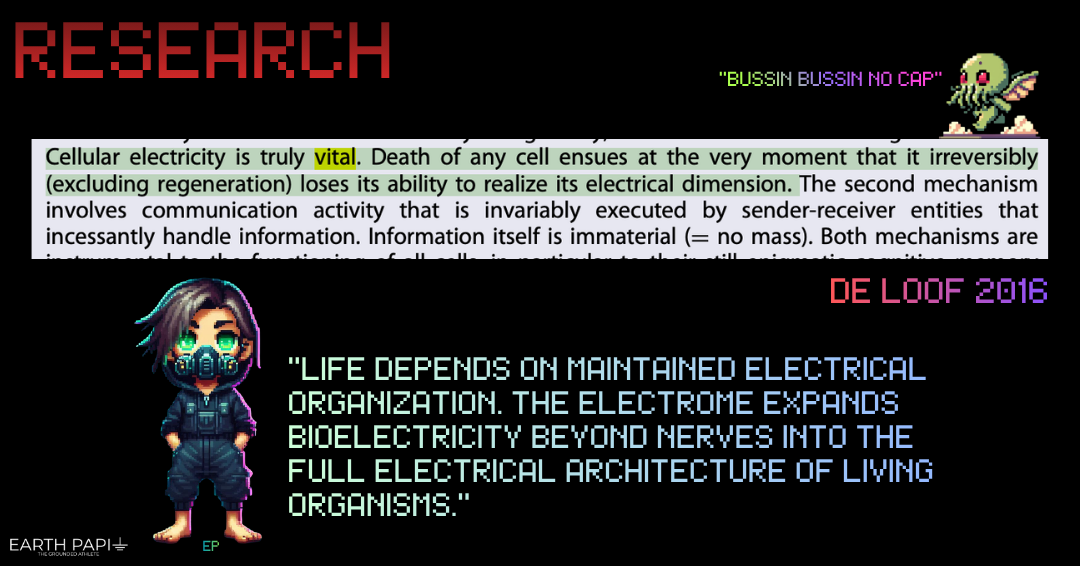
De Loof’s central point is that cellular electricity is not optional. It is vital. A cell dies when it irreversibly loses its electrical dimension (characteristic property).
This gives grounding a clearer scientific language. If life depends on electrical organization, then the body’s electrical relationship with its environment matters. Grounding can be understood as the direct reconnection of the body to the Earth’s electrical reference. The claim does not need to be mystical. The body is made of charged particles, ions, membranes, conductive fluids, and electrochemical gradients. Grounding changes the electrical boundary condition around that living system.
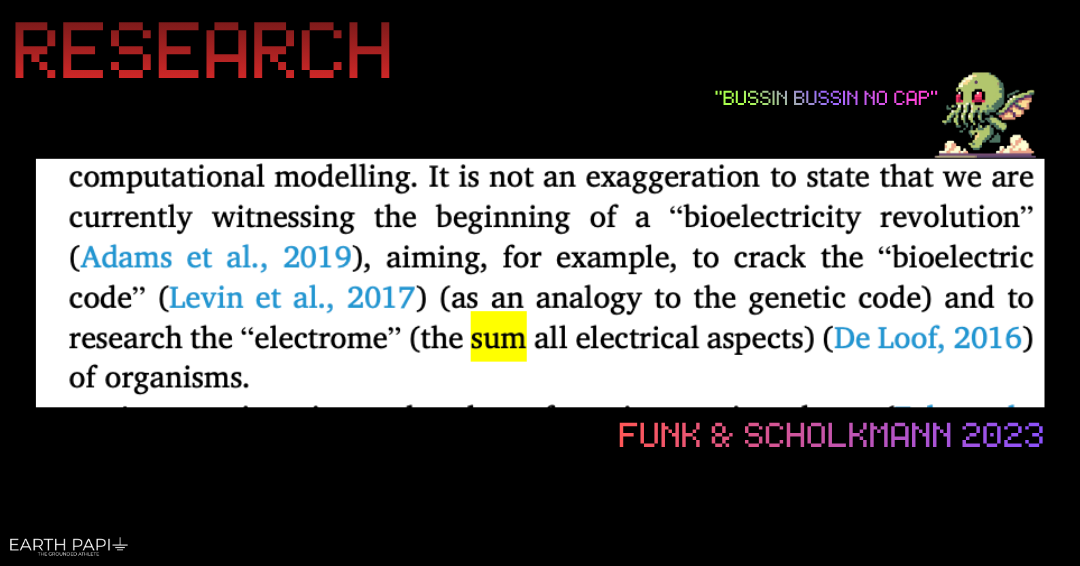
Funk and Scholkmann expand the electrome concept into a detailed biophysical framework. They describe bioelectricity as essential for biological structure and function from the subcellular level up to cells. Their review includes charges, ions, molecules, ion channels, organelles, membranes, mitochondria, and cellular voltage states.
They also place the electrome inside the modern “bioelectricity revolution,” defining it as the sum of all electrical aspects of organisms. This is important because bioelectricity is often reduced to nerves and action potentials. But the electrome is broader. It includes the electrical nature of molecules, cytoskeletal structures, organelles, membranes, and cellular communication.
At the most basic level, biological systems are full of electrical charges. Electrons, protons, calcium, potassium, sodium, iron, and other ions are present throughout living systems. These charged particles can move as currents and produce electric, magnetic, and electromagnetic fields depending on their motion.

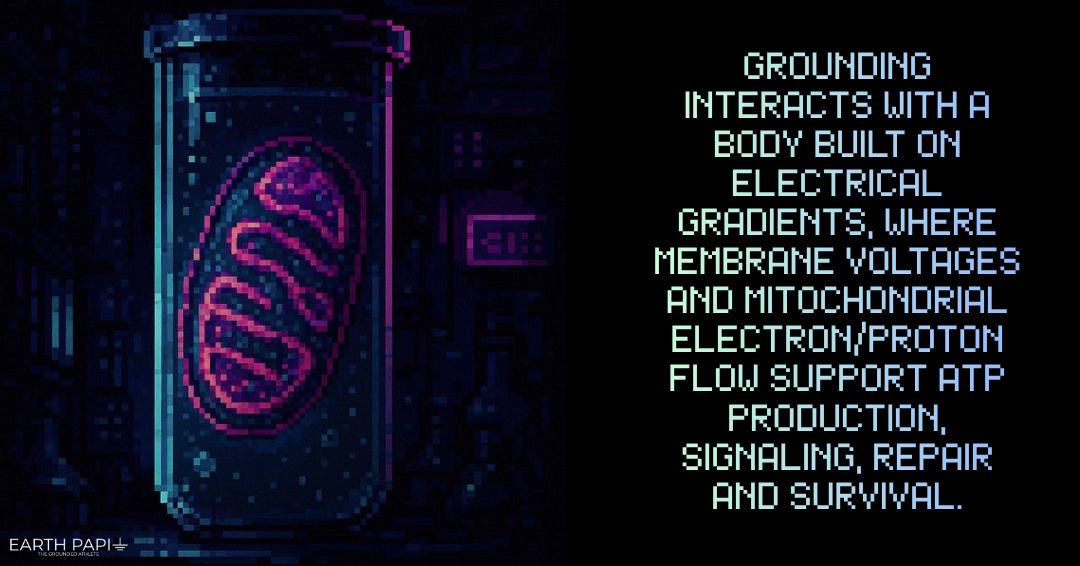
This matters because grounding is not acting on an electrically empty body. It is interacting with a body already built from electrical gradients. Every living cell separates charge across membranes. Ion channels and pumps help maintain voltage. Mitochondria use electron and proton movement to generate an electrochemical gradient for ATP production. The electrical state of the cell is tied to energy, signaling, repair, and survival.
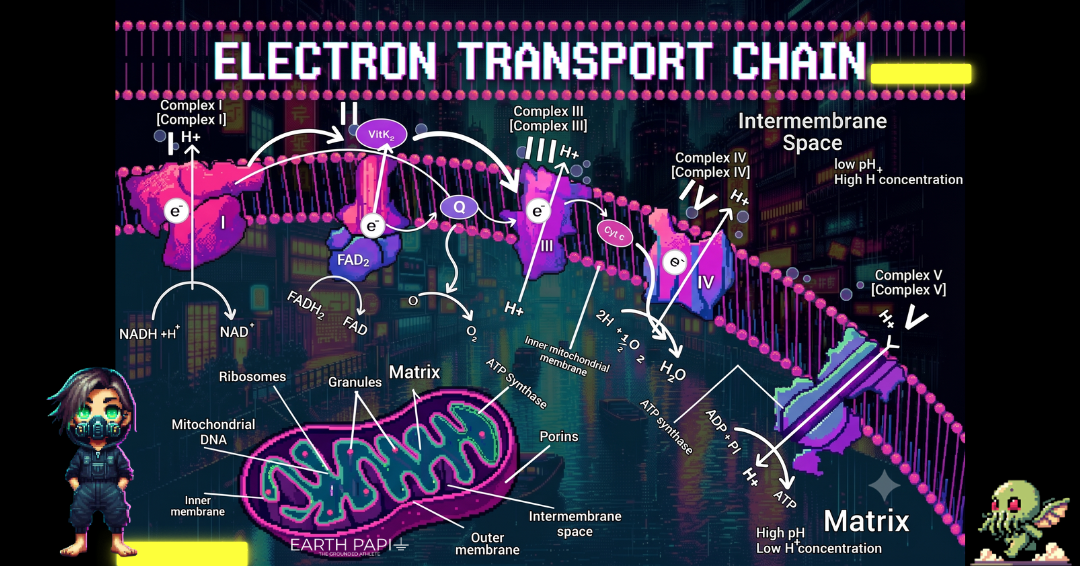
The electrome also includes the electrical properties of biological molecules. Proteins, DNA, RNA, lipids, membranes, and cytoskeletal structures have charge distributions that affect how they fold, bind, signal, and organize. Funk and Scholkmann describe the cytoskeleton as a structural network that may facilitate electrical charge and signal transmission inside cells.
This gives grounding a larger implication. Grounding should not only be studied as an antioxidant or anti-inflammatory intervention. It should also be studied as a possible interaction with the organism’s electrical state. Redox biology itself is based on electron movement. Mitochondrial energy production is electrochemical. Inflammation changes ionic flow, vascular behavior, membrane state, oxidative stress, and tissue conductivity. Healing requires the restoration of order, gradients, and communication.
I think the strongest framing from these papers is this:
Grounding may act as an external electrical boundary condition for the electrome.
That does not mean every mechanism is already proven. It means the target is scientifically real. The body is a charged, hydrated, conductive, voltage-maintaining organism. Its cells survive by maintaining electrical disequilibrium. The electrome gives us a name for that real-time electrical architecture.
From this perspective grounding isn’t simply “touching the Earth.” It is the reconnection of a living electrical system to a planetary electrical reference. If the body’s function depends on ionic currents, membrane voltages, mitochondrial gradients, redox state, and cellular communication, then the electrical relationship between the body and the Earth becomes a serious biological question.

Grounding is still in its infancy as far as the research goes, and I think the next stage of grounding research should ask sharper questions. Does grounding shift tissue electrical potentials? Does it influence redox-linked membrane behavior? Does it change inflammatory bioelectrical states? Does it affect autonomic electrophysiology? Does it support the body’s ability to maintain electrical order under stress?
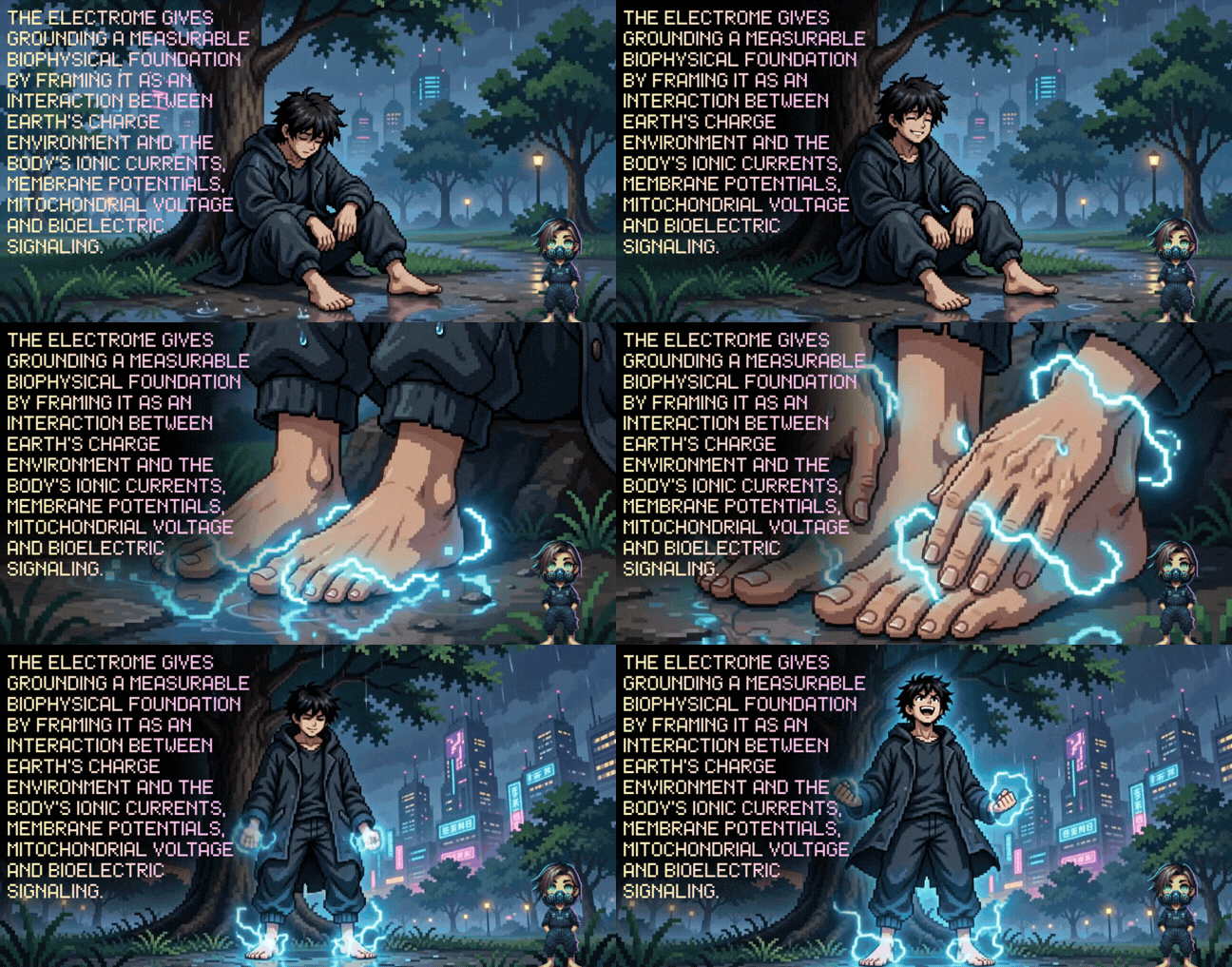
The electrome gives grounding a stronger foundation because it moves the conversation away from vague energy language and toward measurable biophysics. The body is electrical before it is anything else.. atoms carry charge, ions move, membranes polarize, mitochondria generate voltage, and cells communicate through electrical gradients.
Grounding belongs in this discussion because it reconnects the organism to the Earth’s charge environment. The question is no longer whether the body is electrical. The question is how environmental electrical contact influences the living electrical system we call the electrome.
References
De Loof, A. (2016). The cell’s self-generated “electrome”: The biophysical essence of the immaterial dimension of Life?Communicative & Integrative Biology, 9(5), e1197446. https://doi.org/10.1080/19420889.2016.1197446
Funk, R. H. W., & Scholkmann, F. (2023). The significance of bioelectricity on all levels of organization of an organism. Part 1: From the subcellular level to cells.Progress in Biophysics and Molecular Biology, 177, 185–201. https://doi.org/10.1016/j.pbiomolbio.2022.12.002