
Earth & Death: Grounding and The Aging Process

Allow me some poeticism for this article, my friends. Our voyage through existence inevitably points toward an enduring mystery, an elemental truth as old as life itself.. the inevitability of death. This companion to all living things reminds us of our mortality. Born from the womb of time, we flourish, we age, and eventually return to the cosmic silence from which we emerged. Aging etches its story across the body, mind, and spirit. It marks the movement from growth to decline, from vitality to fragility, from emergence to return. Yet aging and death are not merely endings. They add depth to life. They sharpen the value of time. They remind us that even the later chapters of existence carry knowledge, weight, and grace.
In this article, we will examine theories of aging, the relationship between physiology and environment, and how grounding may influence the aging process. Because this subject brings us close to mortality, I found myself drawn to several neat perspectives on death.
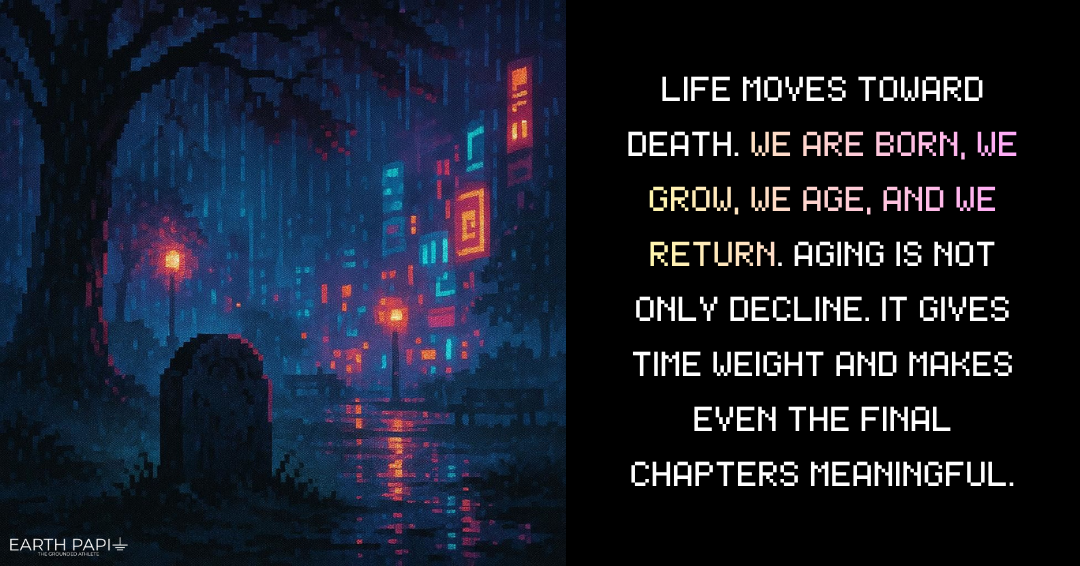
“Death is merciful, for there is no return therefrom, but with him who has come back out of the nethermost chambers of night, haggard and knowing, peace rests nevermore.”
— H.P. Lovecraft
“I don’t have to know an answer. I don’t feel frightened by not knowing things, by being lost in the mysterious universe without having any purpose — which is the way it really is, as far as I can tell, possibly. It doesn’t frighten me.”
— Richard Feynman
“The general struggle for existence of animate beings is therefore not a struggle for raw materials — these, for organisms, are air, water, and soil, all abundantly available — nor for energy which exists in plenty in anybody in the form of heat, but a struggle for negative entropy.”
— Ludwig Boltzmann
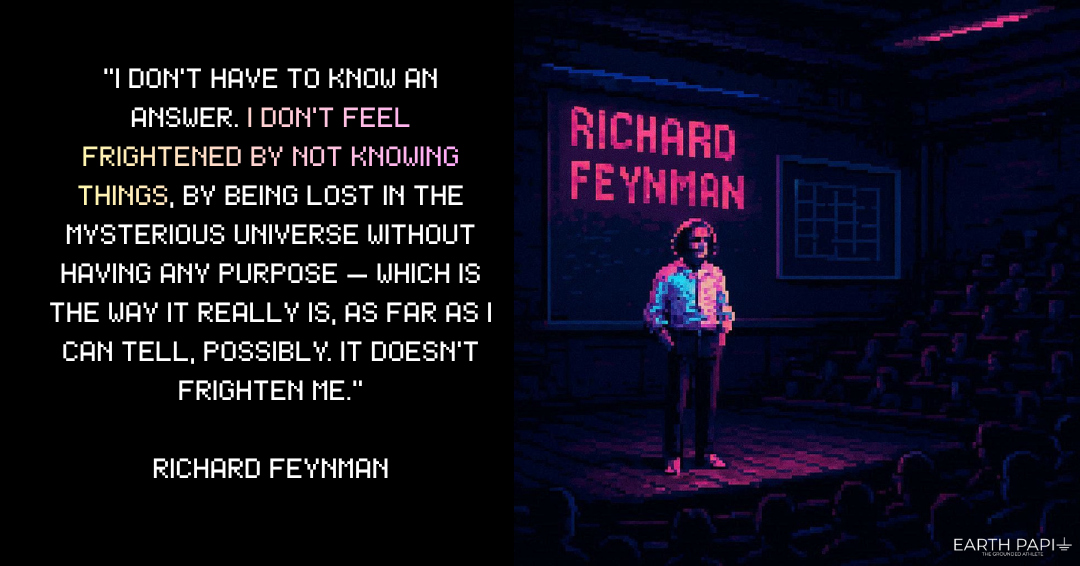
Each of these perspectives approaches death differently. Lovecraft gives death a dark finality. Feynman meets the unknown with curiosity. Boltzmann brings the discussion into physics by pointing toward the deeper biological struggle.. the fight to maintain order against entropy.
This is where aging becomes especially interesting. Life is not a closed system. Cells constantly draw energy and matter from the environment to maintain structure, repair damage, synthesize proteins, replicate DNA, generate ATP, and preserve internal order. These processes allow living systems to resist disorder for a time.
But as aging progresses, the efficiency of these systems declines. External stress, internal wear, molecular damage, and metabolic inefficiency gradually undermine cellular coherence. Aging can therefore be viewed as the gradual rise of entropy within biological systems. It reflects the loss of molecular and cellular order that defines life.
Through this lens, life becomes an ongoing effort to organize energy, preserve structure, and delay disorder. Aging is not only a biological process. It is also a thermodynamic one. The body must constantly maintain order in a universe that favors dispersal.

With age comes not only mortality but an increased risk of disease. Heart disease, cancer, Alzheimer’s disease, osteoporosis, diabetes, and other chronic conditions become more common as repair, immune control, mitochondrial function, and tissue integrity decline. This is why longevity research often focuses not merely on lifespan but healthspan: the period of life spent in good health, with preserved function and resilience.
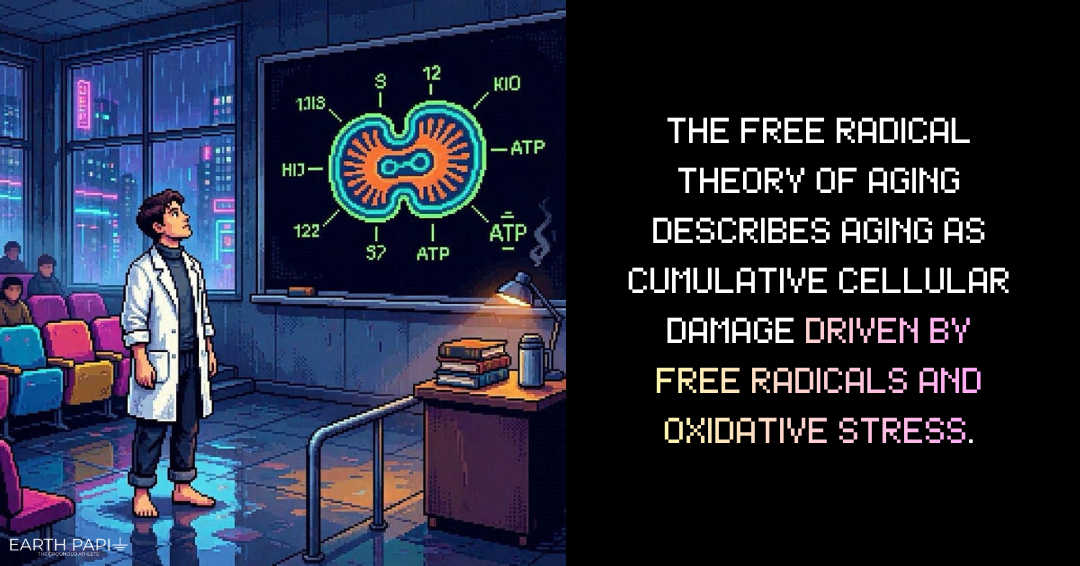
Several major theories attempt to explain aging. The Free Radical Theory of Aging proposes that free radicals and oxidative stress contribute to cumulative cellular damage. The Telomere Theory focuses on the shortening of chromosome protective telomeres during cell division. The Mitochondrial Theory points to mitochondrial damage, impaired ATP production, and increased oxidative stress. The Hormonal Theory examines age related endocrine changes. The Immune Theory focuses on immune decline, chronic inflammation, and increased vulnerability to disease. The Epigenetic Theory examines changes in gene expression that occur without altering the DNA sequence.
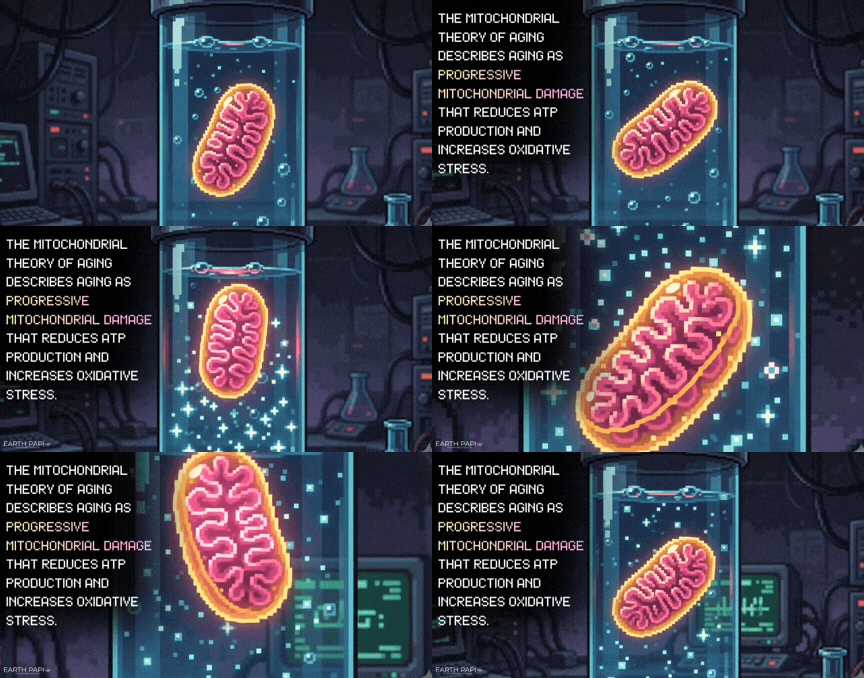
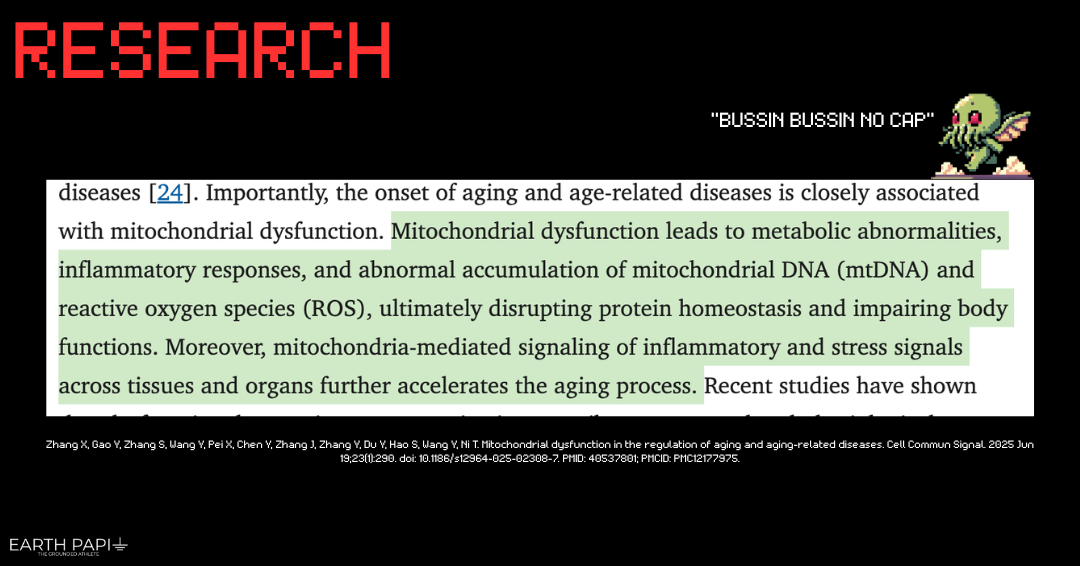
Researcher Doug Wallace argues that many metabolic, degenerative, inflammatory, aging, and cancer-related diseases begin as failures of mitochondrial energy flow, where impaired OXPHOS disrupts ATP production, redox balance, ROS control, calcium homeostasis, and cell survival.

These theories are not separate boxes. They overlap. DNA damage, mitochondrial dysfunction, oxidative stress, inflammation, immune aging, and altered gene expression are all connected. Aging is not caused by one failure. It is a network failure. For this chapter, we will focus mainly on two closely related theories: the Free Radical Theory of Aging and the Mitochondrial Theory of Aging.
Free radicals are highly reactive molecules with unpaired electrons. Because of this instability, they can damage DNA, proteins, lipids, membranes, and other cellular structures. Oxidative stress occurs when free radical production exceeds the body’s ability to neutralize them through antioxidant systems and repair mechanisms.
Denham Harman proposed the Free Radical Theory of Aging in 1956. His idea was simple but powerful: free radicals generated during normal metabolism can create cumulative oxidative damage over time. This damage may contribute to aging and age related disease. Oxidative stress is now understood as more than random molecular damage. Reactive oxygen species also function as signaling molecules. The problem is not oxidation itself. The problem is imbalance. When free radical production exceeds redox control, the result is cellular dysfunction.
Oxidative damage can affect DNA and increase mutation risk. It can alter proteins and impair enzymatic activity. It can damage lipids and disrupt membrane structure. Over time, these changes can weaken tissue function and increase susceptibility to disease. Cells do have antioxidant defenses and repair systems. But with age, these systems may become less efficient. The result is greater vulnerability to oxidative stress, inflammation, and tissue decline.
The Mitochondrial Theory of Aging is closely related. Mitochondria generate ATP, the energy currency of the cell. They also regulate metabolism, redox signaling, calcium dynamics, and cell survival. When mitochondria are damaged, ATP production may decline and reactive oxygen species may increase.
This can create a damaging loop: mitochondrial dysfunction leads to reduced ATP which leads to impaired repair which leads to increased oxidative stress which causes further mitochondrial damage. ATP is not optional. It powers DNA repair, protein synthesis, autophagy, ion transport, cellular signaling, and nearly every process required to keep the organism alive. A body without ATP cannot maintain life.
Cyanide poisoning reveals this with brutal clarity. Cyanide inhibits cytochrome c oxidase in the electron transport chain. This blocks cellular respiration and ATP production. Without ATP, cellular function collapses rapidly. The example is extreme but it shows the central point: life depends on electron flow and energy conversion inside mitochondria.
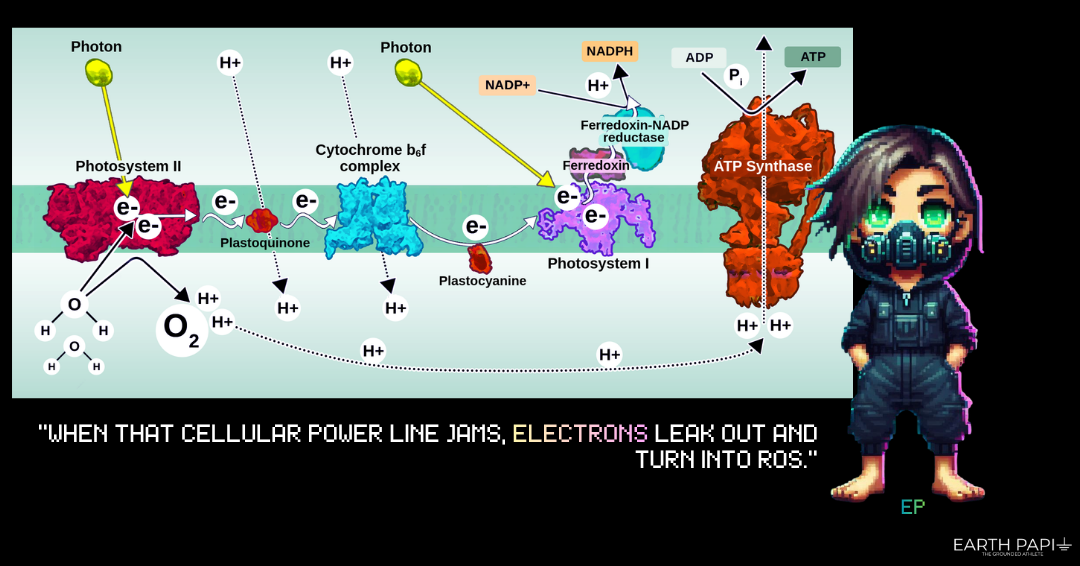
The electron transport chain is located within the inner mitochondrial membrane. Electrons move through protein complexes I to IV, along with mobile carriers such as coenzyme Q10 and cytochrome c. As electrons move down the chain, their energy helps pump protons into the intermembrane space. This creates a proton gradient. ATP synthase then uses that gradient to produce ATP from ADP and inorganic phosphate.
Oxygen acts as the final electron acceptor. It combines with electrons and protons to form water. Efficient electron flow supports ATP production. Inefficient electron transfer can increase reactive oxygen species. This is one reason mitochondrial function and oxidative stress are so tightly connected.
So where does grounding fit?
Grounding is proposed as a biological intervention through the transfer of negative charge from the Earth to the body. In simple terms, the body is conductive, the Earth is a vast electrical reservoir, and direct contact allows electrical exchange.
If grounding increases the availability of electrons within the body, then it may influence several aging related systems. Electrons are central to redox biology. Electron flow is fundamental to mitochondrial ATP production. Oxidative stress is tied to electron imbalance and incomplete electron transfer. Inflammation is also deeply connected to redox state. From this perspective, grounding may support the body by improving electrical stability, moderating oxidative stress, and helping preserve the bioelectrical conditions required for cellular repair and energy production.
This places grounding inside biology, not outside it. Cells are electrical systems. Membranes hold voltage. Mitochondria move electrons. Proteins respond to charge. Blood cells carry surface charge. Water organizes around biological surfaces. The body is not only chemical. It is electrochemical.
Grounding may therefore influence aging through several routes. It may support redox balance by supplying electrons that help neutralize reactive oxygen species. It may support mitochondrial function by improving the electrical environment in which electron transfer and ATP production occur. It may reduce oxidative burden, which is central to both the Free Radical Theory and the Mitochondrial Theory of Aging. It may also reduce the burden placed on internal antioxidant systems.
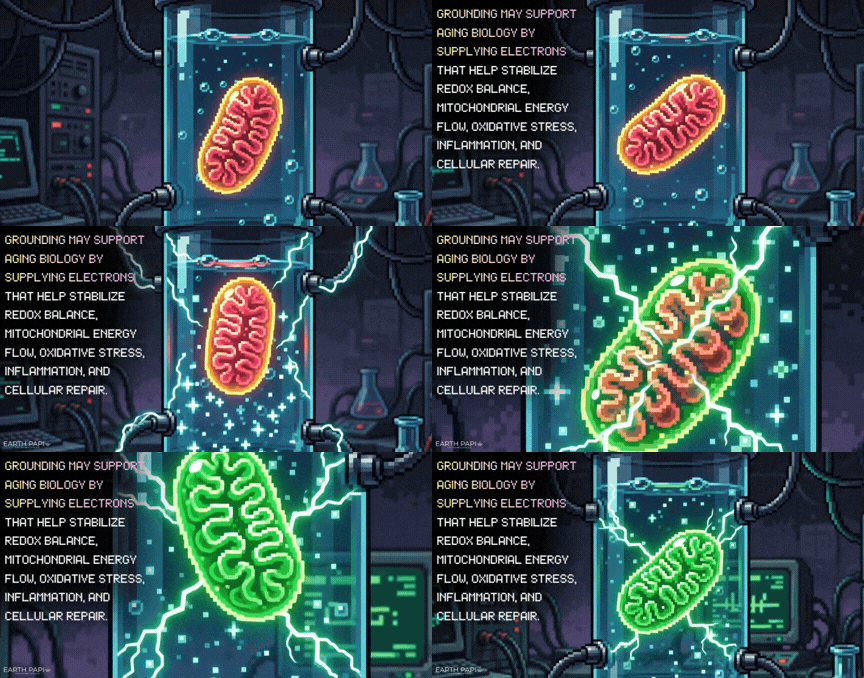
This idea is not foreign to biology. Electron donation already matters in mitochondrial health. Coenzyme Q10 and NADH are examples of molecules involved in electron transfer. Grounding may represent a natural environmental form of electron access, rooted in contact with the Earth.
Beyond free radicals and mitochondria, the extracellular matrix also plays an important role in aging. The ECM is a network of proteins and carbohydrates that provides structural and biochemical support to cells. It helps organize tissues, guide cellular behavior, and mediate communication between cells and their environment.
With age, the ECM changes. It can become fragmented, glycated, crosslinked, stiffened, and damaged. These changes affect tissue mechanics, cellular signaling, and repair capacity. The ECM is not passive scaffolding. It is part of the biological environment that determines how cells behave.
The term “matreotype” has been proposed to describe ECM composition and modification patterns associated with aging, disease, or longevity. A youthful matrix supports healthy cellular function. An aged matrix can contribute to dysfunction. Some research suggests that placing aged or senescent cells into a younger ECM can improve aspects of cellular behavior. See the work of Collin Ewald.
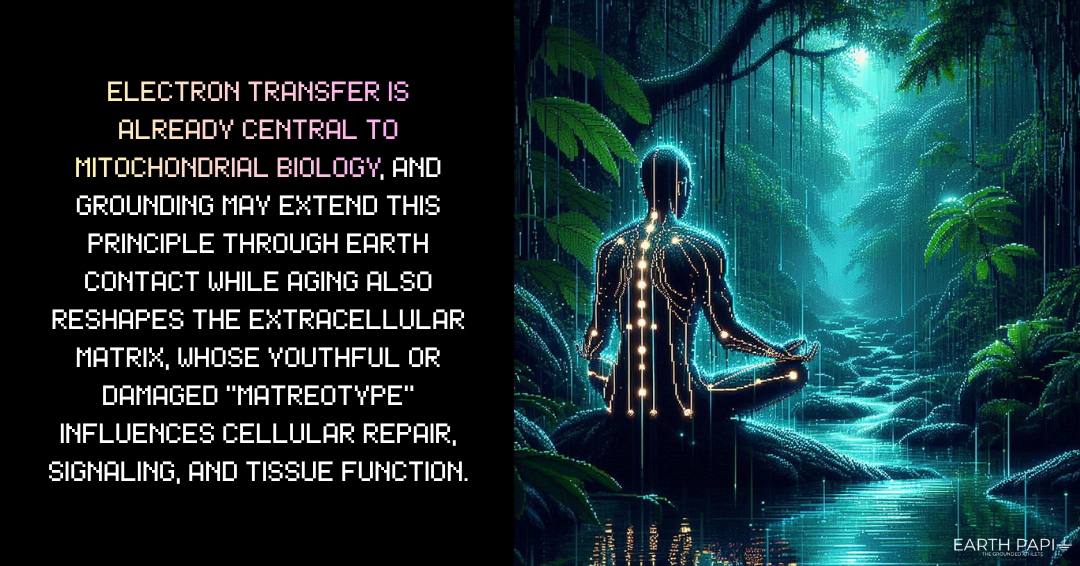
This matters because grounding may also influence the body’s matrix. The ECM, water, proteins, and charged surfaces form a continuous biological environment where electrical and mechanical signals are linked. If grounding improves the body’s electrical state, it may also support the matrix conditions involved in tissue repair, cellular communication, and long term resilience. I write about this in volume 2 of Earth & Water. In Earth & Death, we have moved through the Free Radical Theory of Aging, the Mitochondrial Theory of Aging, and the Matrix Theory of Aging. Together, they show aging as a gradual loss of order, energy efficiency, redox control, and structural coherence.
Grounding enters this discussion as a simple but meaningful biological input. By reconnecting the body to the Earth’s electrical reservoir, grounding may help support the charge dynamics involved in redox balance, mitochondrial function, inflammation control, and matrix health. Death remains inevitable. Aging remains the long biological negotiation before it. But if life is a struggle for order against entropy, then grounding deserves attention as one of the simplest ways the body may restore electrical contact with the larger environment that shaped it.
As always, if you’re interested in learning more about grounding, check out Earth & Water.

References:
Harman, D. (1956). Aging: a theory based on free radical and radiation chemistry. Journal of gerontology, 11(3), 298-300. doi: 10.1093/geronj/11.3.298
Finkel, T., & Holbrook, N. J. (2000). Oxidants, oxidative stress and the biology of ageing. Nature, 408(6809), 239-247. doi: 10.1038/35041687
Sies, H. (2015). Oxidative stress: a concept in redox biology and medicine. Redox Biology, 4, 180-183. doi: 10.1016/j.redox.2015.01.002
López-Otín, C., Blasco, M. A., Partridge, L., Serrano, M., & Kroemer, G. (2013). The hallmarks of aging. Cell, 153(6), 1194-1217. doi: 10.1016/j.cell.2013.05.039
Trifunovic, A., Wredenberg, A., Falkenberg, M., Spelbrink, J. N., Rovio, A. T., Bruder, C. E., ... & Larsson, N. G. (2004). Premature ageing in mice expressing defective mitochondrial DNA polymerase. Nature, 429(6990), 417-423. doi: 10.1038/nature02517
Lin, M. T., & Beal, M. F. (2006). Mitochondrial dysfunction and oxidative stress in neurodegenerative diseases. Nature, 443(7113), 787-795. doi: 10.1038/nature05292
Wei, Y. H., Lee, H. C., & Oxidative stress, mitochondrial DNA mutation, and impairment of antioxidant enzymes in aging. (2002). Experimental Biology and Medicine, 227(9), 671-682. doi: 10.1177/153537020222700902
Stadtman ER. Protein oxidation and aging. Free Radic Res. 2006 Dec;40(12):1250-8. doi: 10.1080/10715760600918142. PMID: 17090414.
Russell, A. P., Foletta, V. C., Snow, R. J., & Wadley, G. D. (2014). Skeletal muscle mitochondria: a major player in exercise, health and disease. Biochimica et Biophysica Acta (BBA) - General Subjects, 1840(4), 1276-1284. Link: https://doi.org/10.1016/j.bbagen.2013.11.016
Light, A. R., Bateman, L., Jo, D., Hughen, R. W., Vanhaitsma, T. A., White, A. T., & Light, K. C. (2012). Gene expression alterations at baseline and following moderate exercise in patients with Chronic Fatigue Syndrome and Fibromyalgia Syndrome. Journal of Internal Medicine, 271(1), 64-81. Link: https://doi.org/10.1111/j.1365-2796.2011.02405.x
Mattson, M. P., & Arumugam, T. V. (2018). Hallmarks of brain aging: adaptive and pathological modification by metabolic states. Cell Metabolism, 27(6), 1176-1199. Link: https://doi.org/10.1016/j.cmet.2018.05.011
Grimm, A., Eckert, A. (2017). Brain aging and neurodegeneration: from a mitochondrial point of view. Journal of Neurochemistry, 143(4), 418-431. Link: https://doi.org/10.1111/jnc.14037
Ewald CY. The Matrisome during Aging and Longevity: A Systems-Level Approach toward Defining Matreotypes Promoting Healthy Aging. Gerontology. 2020;66(3):266-274. doi: 10.1159/000504295. Epub 2019 Dec 13. PMID: 31838471; PMCID: PMC7214094.
Statzer C, Park JYC, Ewald CY. Extracellular Matrix Dynamics as an Emerging yet Understudied Hallmark of Aging and Longevity. Aging Dis. 2023 Jun 1;14(3):670-693. doi: 10.14336/AD.2022.1116. PMID: 37191434; PMCID: PMC10187690.
Boltzmann L (1974). The Second Law of Thermodynamics. In: McGuinness B, editor Theor. Phys. Philos. Probl. Dordrecht: Springer Netherlands, 13-32.
Kirkwood TBL (2005). Understanding the odd science of aging. Cell, 120:437-447.
Denbigh KG (1981). The principles of chemical equilibrium: with applications in chemistry and chemical engineering, 4th ed. Cambridge University Press: Cambridge; New York; 1981.
Hayflick L (2007). Entropy Explains Aging, Genetic Determinism Explains Longevity, and Undefined Terminology Explains Misunderstanding Both. PLOS Genet, 3:e220
López-Otín C, Blasco MA, Partridge L, Serrano M, Kroemer G (2013). The hallmarks of aging. Cell, 153:1194-1217.
Wallace, D. C. (2013). A mitochondrial bioenergetic etiology of disease. The Journal of Clinical Investigation, 123(4), 1405–1412. https://doi.org/10.1172/JCI61398
Zhang X, Gao Y, Zhang S, Wang Y, Pei X, Chen Y, Zhang J, Zhang Y, Du Y, Hao S, Wang Y, Ni T. Mitochondrial dysfunction in the regulation of aging and aging-related diseases. Cell Commun Signal. 2025 Jun 19;23(1):290. doi: 10.1186/s12964-025-02308-7. PMID: 40537801; PMCID: PMC12177975.