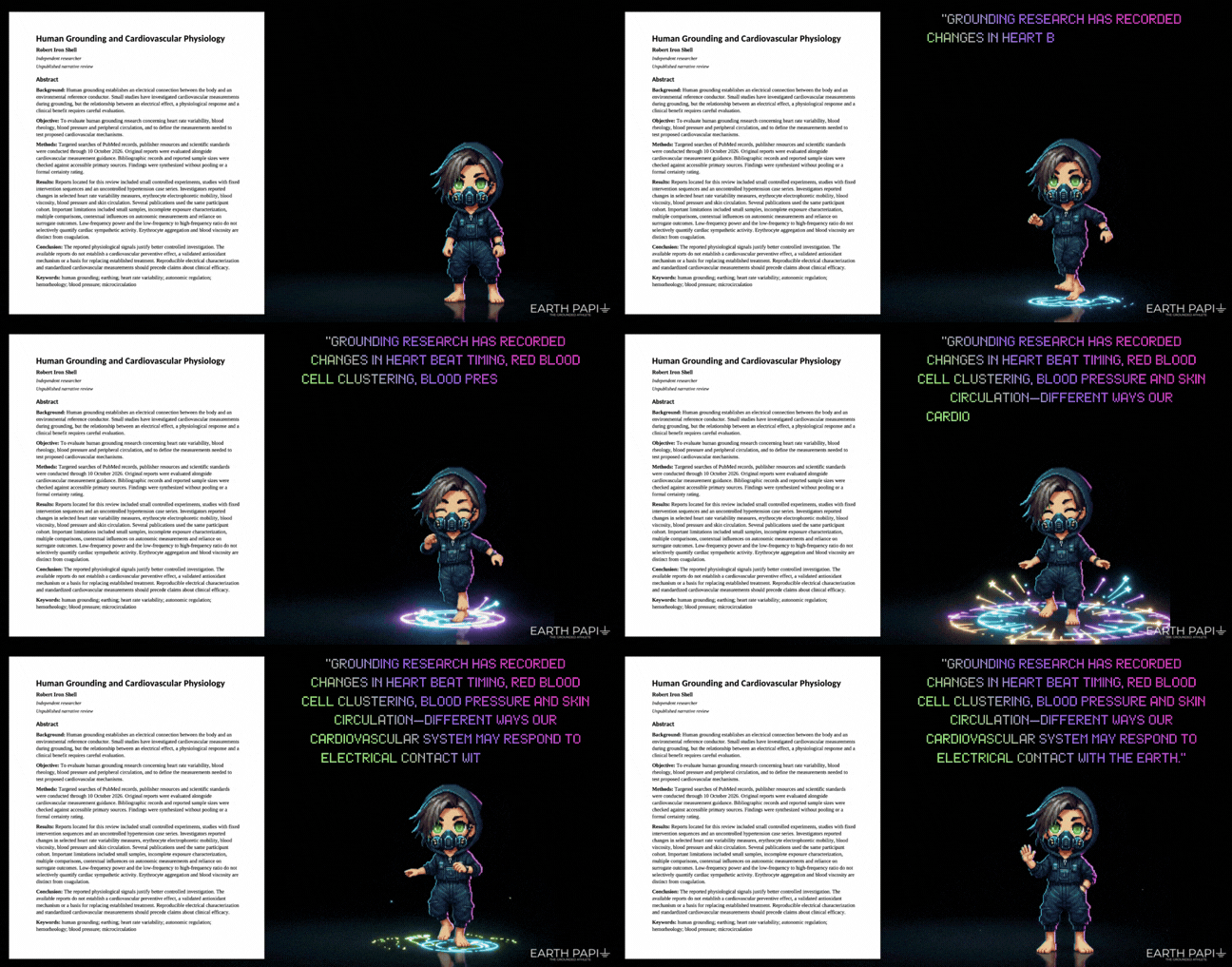
The first manuscript looked at what happens electrically when the body connects to Earth. The second asks what researchers have measured on the cardiovascular side: the timing between heartbeats, how red blood cells move, blood pressure and circulation near the skin.
Heart rate and heart rate variability
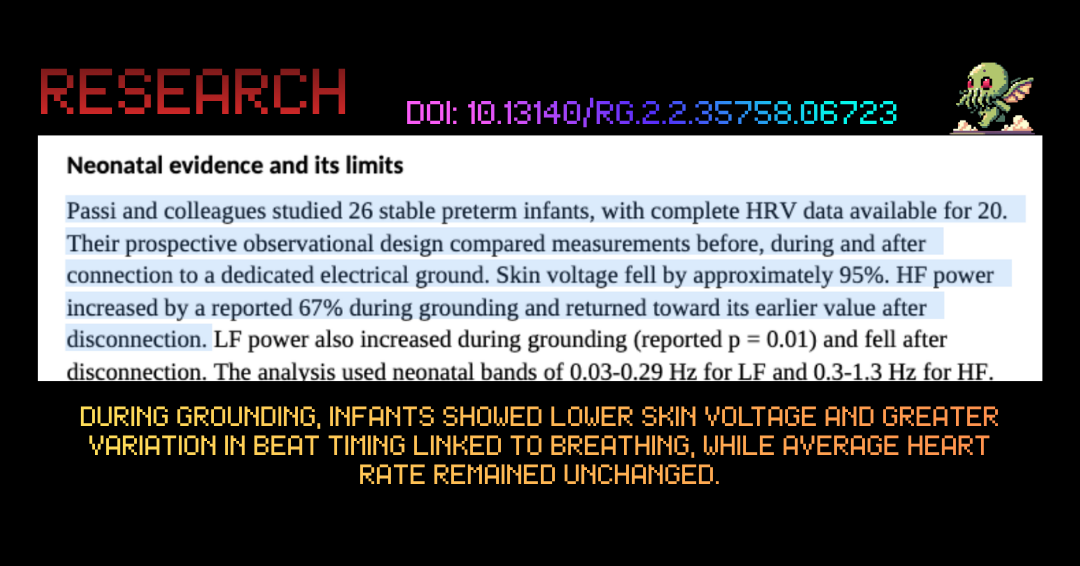
Your heart can beat at the same average rate while the timing between individual beats changes. A study by Passi and colleagues illustrates that distinction. They studied 26 preterm infants and obtained complete heart rate variability recordings from 20. During grounding, skin voltage fell by about 95%. A component of heart rate variability associated with breathing rose by 67% and moved back toward its earlier level after disconnection. Average heart rate did not change significantly.
The researchers recorded an electrical change at the skin and a change in beat timing during the same session. The study did not establish that the voltage drop caused the change in heart rhythm.

Red blood cells and blood viscosity
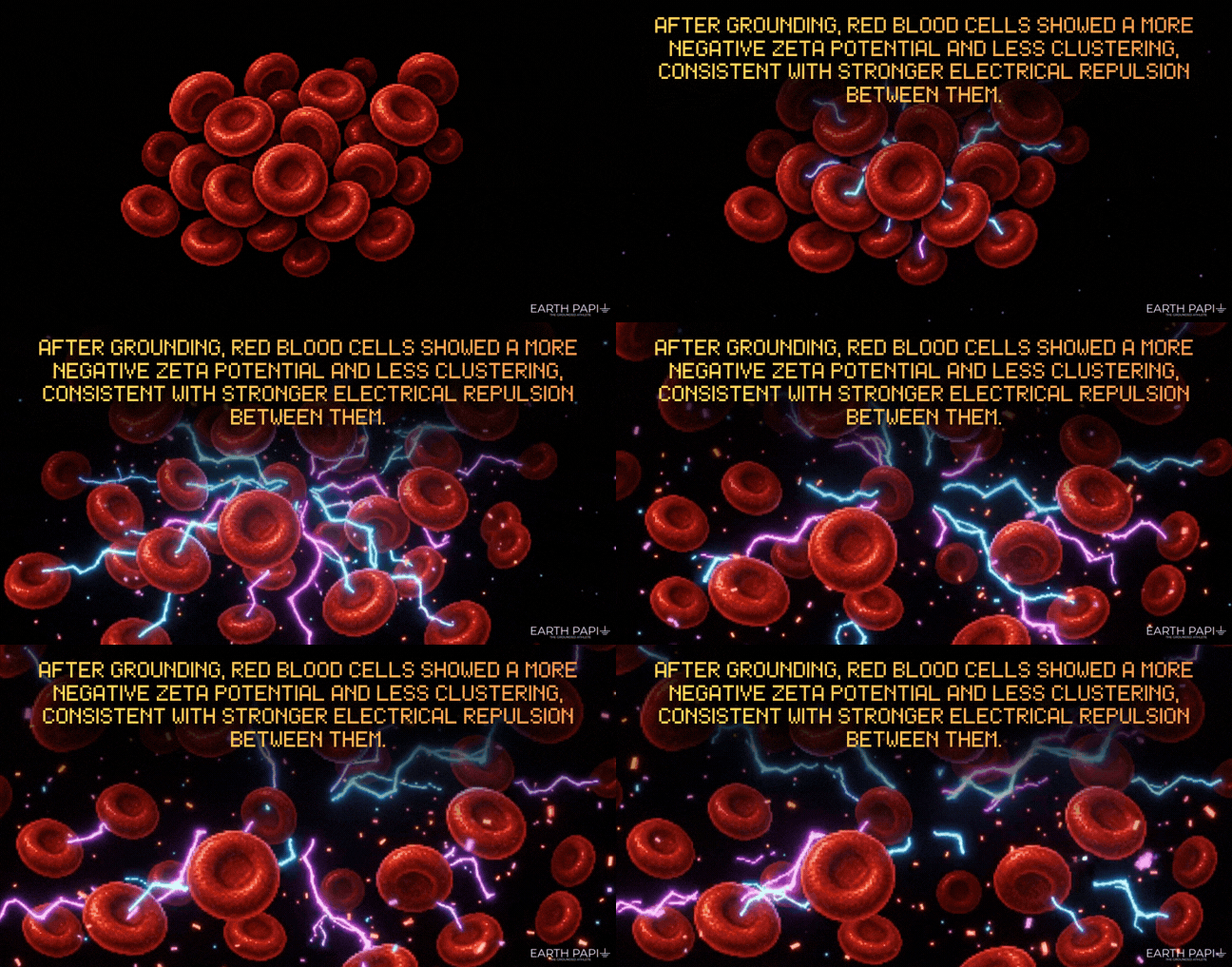
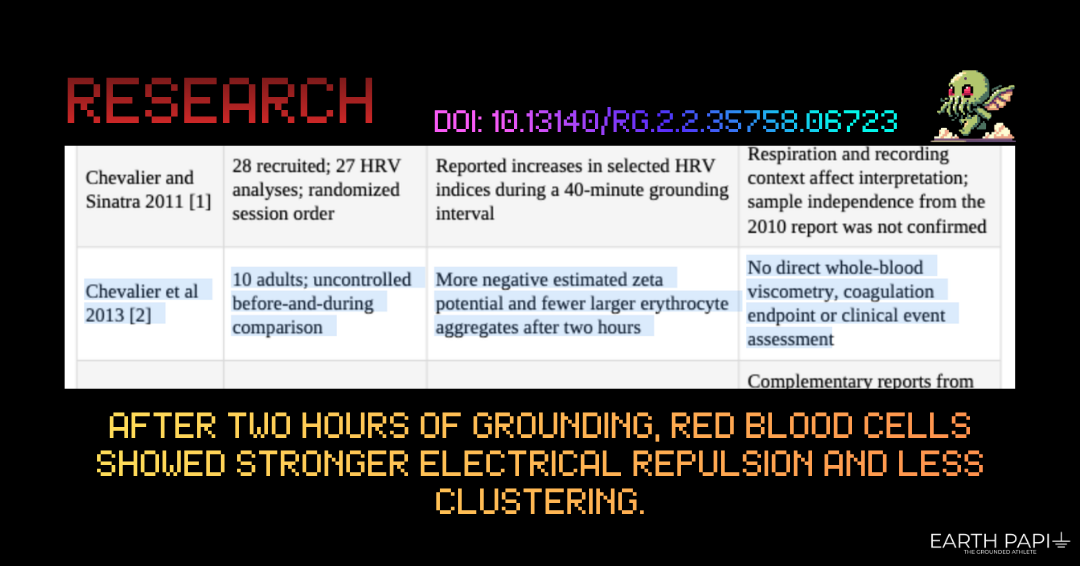
Red blood cells carry a negative surface charge that helps them repel one another. In a study of 10 adults, two hours of grounding was followed by a shift in red blood cell zeta potential from −5.28 to −14.3 millivolts. The more negative value was consistent with stronger electrical repulsion, and researchers observed less cell clustering in the blood samples.
That experiment measured how the cells behaved. A separate study measured blood viscosity directly, meaning how strongly blood resists flow. Twenty-eight women completed an hour of yoga on either grounded or sham mats. Viscosity fell from baseline in the grounded group, but the groups did not differ significantly after exercise. The two studies therefore answer different questions: one documented a change in cell clustering; the other did not establish a difference in post-exercise viscosity between groups.
Blood pressure and skin circulation
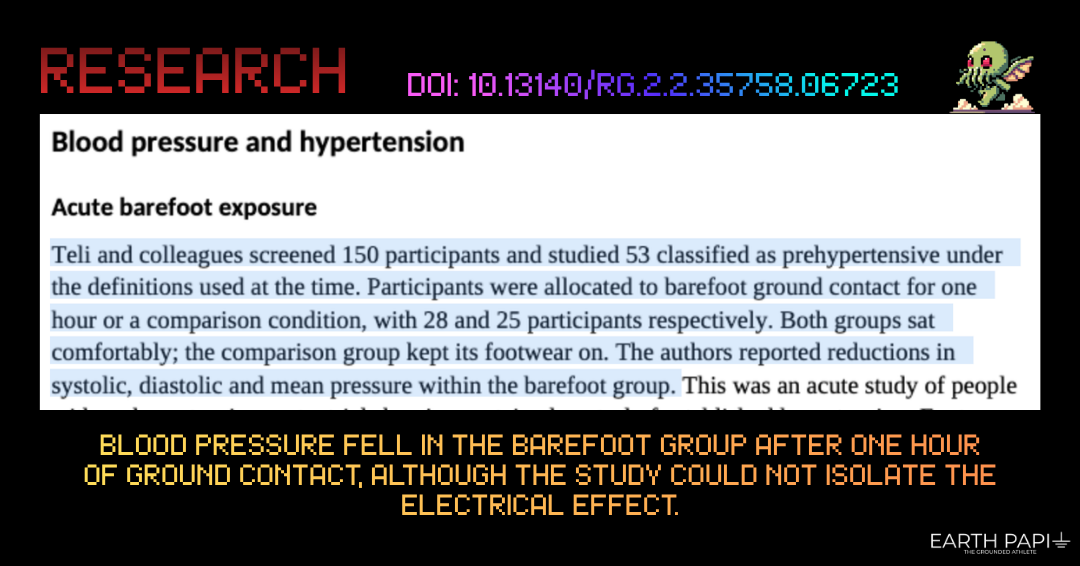
In a study of 53 adults with elevated blood pressure, researchers reported lower blood pressure readings after participants sat barefoot in contact with the ground for one hour. The comparison group kept its shoes on, so the experiment could not separate electrical contact from differences in temperature and sensation.

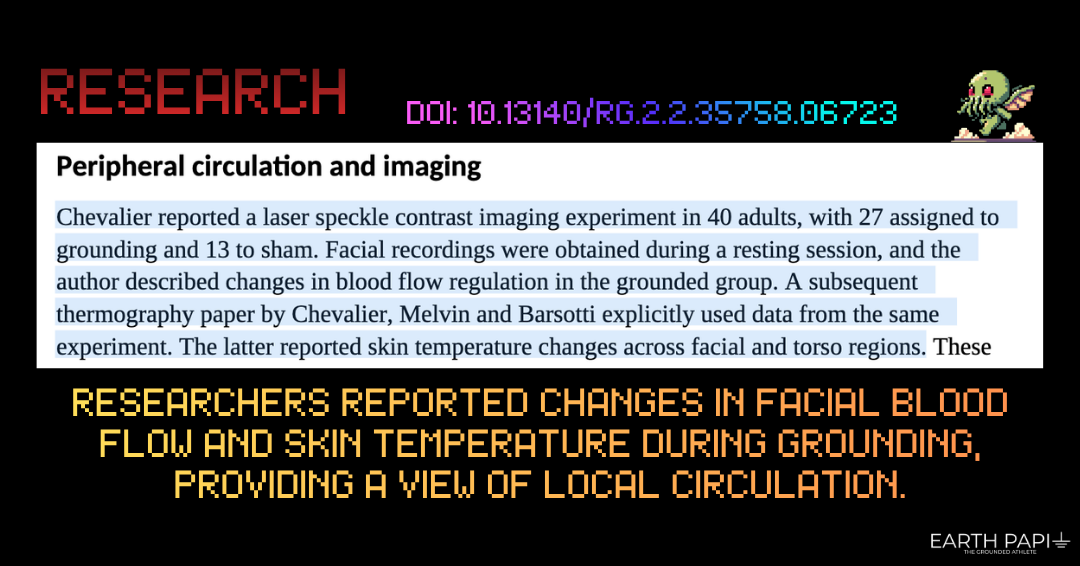
Separate imaging studies examined blood flow and temperature at the skin. Those measurements describe local circulation and cannot tell us how much blood reaches the heart or brain.

The clearest finding across these studies is that some cardiovascular measurements changed during or after grounding. Which measurement changed is the key: the heart can maintain its average rate while beat timing shifts, and red blood cells can cluster less without demonstrating a change in whole-blood viscosity. That distinction is central to interpreting the research.